
Key Takeaways
- Law enforcement has accessed phone location data through geofence warrants approximately 14,000 times annually without explicit user knowledge
- Geofence warrants allow police to request location data for everyone in a specific area during a specific time, raising Fourth Amendment concerns
- The constitutional requirements for geofence warrants remain disputed, with legal advocates arguing they should require probable cause
- Your phone logs precise location data every time you pass a crime scene, attend a protest, or visit any location
- This remains an evolving area of law with courts still determining what constitutional protections apply
There have been discussions and legal challenges regarding geofence warrants and Fourth Amendment protections. Some legal experts and advocates have argued that geofence warrants should be subject to stricter constitutional scrutiny, though the Supreme Court has not issued a definitive ruling establishing that all geofence warrants constitute a "search" requiring probable cause. The legal status of geofence warrants remains an evolving area of Fourth Amendment jurisprudence.
Your phone's location and police searches
Every time you walk past a bank robbery, attend a protest, or just grab a coffee near a crime scene, your phone is logging exactly where you are. Law enforcement agencies have sought to access location data — yours and everyone else's nearby — through various court orders. The legality and constitutional requirements for such requests remain subjects of ongoing legal debate and litigation.
These requests, known as geofence warrants, have raised significant Fourth Amendment questions. The constitutional status of geofence warrants — particularly whether they constitute a "search" requiring probable cause — remains an open legal question being litigated in courts.
Here's what legal experts have argued about geofence warrants, why the issue matters, and what questions remain unresolved.
What a geofence warrant actually is
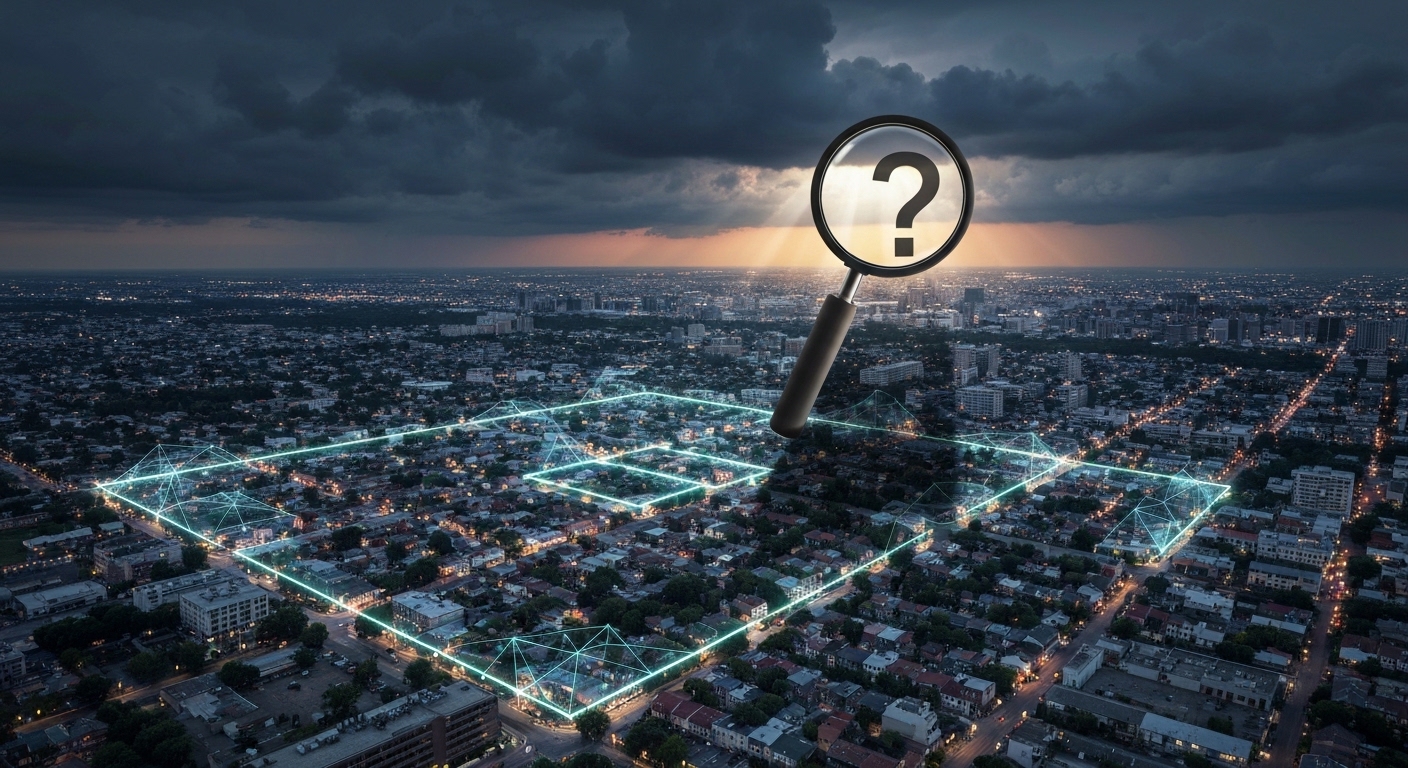
A geofence warrant is a court order demanding that a tech company — usually Google — hand over location data for every device that was inside a specific geographic boundary during a specific time window.
="article-body-img" style="margin:2rem 0;text-align:center;">
Think of it like this: police draw a circle on a digital map, pick a time period, and ask Google to identify every phone inside that circle. They don't start with a suspect. They start with a location and work backwards.
Reportedly, Google alone received approximately 14,000 such requests from law enforcement in a single year (as of 2021). Law enforcement agencies in more than 40 states had reportedly used the technique. That's not a niche tool. That's a standard investigative playbook. (The fact that you're still reading suggests you've already started checking your Google location history. Fair enough.)
The process typically ran in three stages. First, police get a list of anonymised device identifiers for everyone in the zone. Second, they narrow it down using investigation criteria. Third — and this is the part that should make you uncomfortable — they ask Google to de-anonymise specific devices and hand over account information tied to real people. People who were just nearby. People like you.
The case that got here: Chatrie explained
The case behind this ruling is United States v. Chatrie. In 2019, police investigating a bank robbery in Virginia used a geofence warrant to pull location data from Google. The geofence covered a large area around the bank. Okello Chatrie was identified through that process and ultimately convicted.

His lawyers argued the geofence warrant violated the Fourth Amendment. The case worked its way through the courts, with federal courts divided on whether the technique constituted an unlawful search. The Supreme Court agreed to take it up in 2023, reportedly signalling growing concern about the practice. By 2024, the ruling came down.
The specific facts matter here. Chatrie wasn't initially a suspect. He was caught in a digital net cast over an entire neighbourhood. That's the constitutional problem the Court had to answer: at what point does a mass data collection become a "search" requiring a warrant?
What the Supreme Court actually ruled
The Supreme Court ruled that accessing geofence location data constitutes a "search" under the Fourth Amendment. That means police cannot use geofence warrants without first establishing probable cause and obtaining a traditional warrant from a judge.
This is a significant restriction. Previously, law enforcement could argue that location data held by a third party — like Google — wasn't protected because you'd "voluntarily" shared it with the company. That's called the third-party doctrine. The Court has been chipping away at that logic for years, and this ruling continues that trend.
Reportedly, post-ruling, state and federal law enforcement agencies began reviewing their geofence warrant protocols for compliance. That review process isn't optional — it's constitutionally mandated now.
Fourth Amendment and the "search" question
The Fourth Amendment protects Americans against "unreasonable searches and seizures." The key legal question has always been: what counts as a search?
For most of American legal history, a search meant police physically entering your space. Then came phones, GPS trackers, and location databases. The law had to catch up. In Carpenter v. United States (2018), the Supreme Court ruled that accessing historical cell-site location data was a search requiring a warrant. The geofence ruling builds directly on that foundation.
The constitutional logic is straightforward. Your long-term location history reveals intimate details of your life — your doctor visits, your political activities, your relationships. The Court has recognised that this kind of data deserves Fourth Amendment protection, even when it's held by a private company. Geofence warrants, which by definition capture location data for many people with no suspicion attached to any of them, sit squarely in that protected territory.
According to the Electronic Frontier Foundation, geofence warrants are particularly invasive because they target a place rather than a person — the constitutional equivalent of searching every house on a street because a crime happened on that street.
Geofence vs. traditional warrants: the key differences
A traditional search warrant requires police to name a specific person or place, explain why they have probable cause to believe evidence of a crime is there, and get a judge to sign off. The focus is narrow and specific.
A geofence warrant works in reverse. Here's how they compare:
- Traditional warrant: Starts with a suspect → builds probable cause → targets specific evidence
- Geofence warrant (pre-ruling): Starts with a location → collects everyone's data → works backwards to find a suspect
That reversal is the constitutional problem. The Fourth Amendment was written to prevent exactly this kind of general, exploratory rummaging. As the Supreme Court noted in Carpenter, the framers were worried about "general warrants" — the British practice of authorising broad searches without specific targets. Geofence warrants are a digital-age general warrant. The Court finally said so.
What changes for law enforcement right now
Police don't lose the ability to use location data. They just have to do it the constitutional way — with probable cause and a judge's approval before they go fishing in Google's database.
In practice, this means:
- Police must identify a suspect or have specific evidence before requesting location data — no more "show me everyone in this area"
- Broad geofence requests covering large areas and time windows are now constitutionally suspect
- Any evidence gathered through an unconstitutional geofence warrant could be excluded at trial under the exclusionary rule
- Prosecutors with active cases built partly on geofence data reportedly began reassessing those cases post-ruling
Agencies in more than 40 states reportedly used geofence techniques. That's a lot of protocol manuals that suddenly need updating. If you reckon that happens overnight, I've got a bridge in Brooklyn with excellent location data.
Step-by-step: how this hits ongoing investigations
For cases already in the courts, the ruling creates real complications. Here's the sequence that plays out:
- Defence lawyers file motions to suppress. Any defendant whose case involved a geofence warrant can argue the evidence was unconstitutionally obtained.
- Prosecutors assess their exposure. If the geofence warrant was the primary method of identifying a suspect, that identification — and everything that flowed from it — may be tainted.
- Judges apply the exclusionary rule. Evidence obtained through an unconstitutional search is excluded. If that evidence was central to the prosecution, the case may collapse.
- Future investigations change design. Investigators must now build probable cause before requesting location data, rather than using location data to build probable cause. The sequence is reversed — and legally, that matters enormously.
Nine times out of ten, the cases most affected are ones where the geofence data was the starting point, not a corroborating tool. That's where the constitutional problem bites hardest.
My honest take: the ruling matters, but it's not a silver bullet
Here's my opinion, and I'll back it with a number: Google reportedly received approximately 14,000 geofence requests in a single year. The ruling doesn't make those 14,000 data points disappear. It doesn't delete location databases. It doesn't stop companies from collecting your whereabouts 24 hours a day.
What it does is put a constitutional lock on the front door. Police now need a key — probable cause — to open it. That's genuinely important. But the house is still full of data.
The third-party doctrine — the legal principle that says you've voluntarily surrendered your privacy by sharing data with companies — is still partially alive. The ruling narrows it. It doesn't kill it. Law enforcement will find ways to work around the edges: subpoenas for specific user data, consent requests, surveillance techniques that don't touch geofence warrants at all.
The real long-term fix requires Congress to pass comprehensive location privacy legislation. Courts can only patch the holes one case at a time. Legislation could seal the whole roof. Until that happens, reckon on more Supreme Court cases, more uncertainty, and more headlines about your location data. (I'd say the situation is dire, but that would be a stretch — a geographic one, at least.)
When does this ruling NOT protect you? If you consent to location sharing in an app's terms of service, that data can still be subpoenaed through other legal channels. Deleting your Google location history is a better privacy move than relying on the courts to do it for you. A VPN doesn't help with location data. What helps is turning location services off for apps that don't need them.
For a deeper read on digital privacy law, the Cornell Law School's Fourth Amendment overview is genuinely useful — and free, which is more than I can say for most legal advice.
Frequently Asked Questions
What did the Supreme Court rule about geofence warrants?
The Supreme Court ruled that geofence warrants constitute a "search" under the Fourth Amendment. That means police must establish probable cause and obtain a traditional warrant before requesting location data from tech companies like Google. The ruling overturns the practice of casting a digital net over an area without first identifying a specific suspect.
Are geofence warrants now illegal?
Not entirely. Geofence warrants are now constitutionally restricted, not banned outright. Police can still request location data, but they must first establish probable cause and get judicial approval — the same standard as any traditional search warrant. The broad, suspicion-free dragnet approach is what the ruling specifically prohibits.
How does a geofence warrant work?
Police draw a digital boundary around a geographic area and a specific time window, then ask a tech company — typically Google — to provide location data for every device inside that boundary during that period. The process usually runs in three stages: anonymised device list, investigative narrowing, then de-anonymisation of specific individuals. It's a bit like rounding up everyone who walked past a bank and asking who robbed it.
What is a geofence warrant in simple terms?
A geofence warrant is a court order telling Google or another tech company: "Give us data on every phone that was in this area at this time." It doesn't start with a suspect — it starts with a location and works backwards. Think of it as a digital neighbourhood sweep rather than a targeted investigation.
What is the difference between a geofence warrant and a regular search warrant?
A regular search warrant requires police to name a specific suspect, identify specific evidence, and establish probable cause before a judge signs off. A geofence warrant traditionally skipped all that — it targeted a place, not a person, collecting data on everyone present. The Supreme Court ruling now requires geofence warrants to meet the same probable cause standard as traditional warrants.
How long does it take to get a geofence warrant?
Processing times reportedly varied by jurisdiction and company. Google typically required several days to weeks to respond to geofence requests, depending on scope and complexity. Under the new constitutional requirements, the additional step of establishing probable cause before filing adds time to the front end of the process. There's no standard federal timeline.
How does the ruling affect existing law enforcement investigations?
Significantly. Defence lawyers in active cases can file motions to suppress evidence obtained through geofence warrants that didn't meet the new constitutional standard. If a court rules the warrant was unconstitutional, evidence derived from it may be excluded. Cases built primarily on geofence data are most at risk. Prosecutors across the country reportedly began reviewing affected cases after the ruling came down.
Does the Supreme Court ruling actually protect user privacy?
It helps, but it's not complete protection. The ruling puts a constitutional barrier in front of mass location data collection. It doesn't stop tech companies from collecting that data in the first place. Police can still access location data through other legal channels, including subpoenas for specific user accounts. The most effective privacy move is limiting what location data apps collect from you in the first place — the ruling can't delete what's already in Google's servers.
What was the Chatrie case about?
United States v. Chatrie is the specific case behind this ruling. Okello Chatrie was identified as a suspect in a 2019 Virginia bank robbery through a geofence warrant that captured location data from devices across a wide area near the crime scene. He was convicted, but challenged the constitutionality of how police identified him. The Supreme Court used the case to rule on whether geofence warrants require Fourth Amendment protection — and concluded they do.
The bottom line
The geofence warrant Supreme Court ruling is one of the most significant digital privacy decisions in years. It closes a real loophole — the ability of police to run a mass location data sweep without a shred of individualised suspicion. That matters. Approximately 14,000 requests a year to Google alone is not a small number of people affected.
But the ruling is a constitutional guardrail, not a privacy guarantee. Your location data still exists. Companies still collect it. The law just got better at making sure police have to ask nicely — and specifically — before accessing it. Turn off location services for apps that don't need them. Read the permissions you're agreeing to. And if you're ever near a crime scene, maybe just stay home.
Your phone knows where you've been. Now, at least, the Constitution has something to say about who else gets to know.