Key Takeaways
- Samsung's Galaxy Z Fold 6 and Z Flip 6 feature significant design improvements over the original 2019 Galaxy Fold
- Crease reduction achieved through advances in materials science and refined hinge engineering
- Recent models include wider screen proportions, improved aspect ratios, and reduced bezels alongside crease minimization
- Five years of incremental design iterations represent meaningful progress toward practical foldable usability
- Engineering changes focus on both visibility reduction and real-world user experience improvements
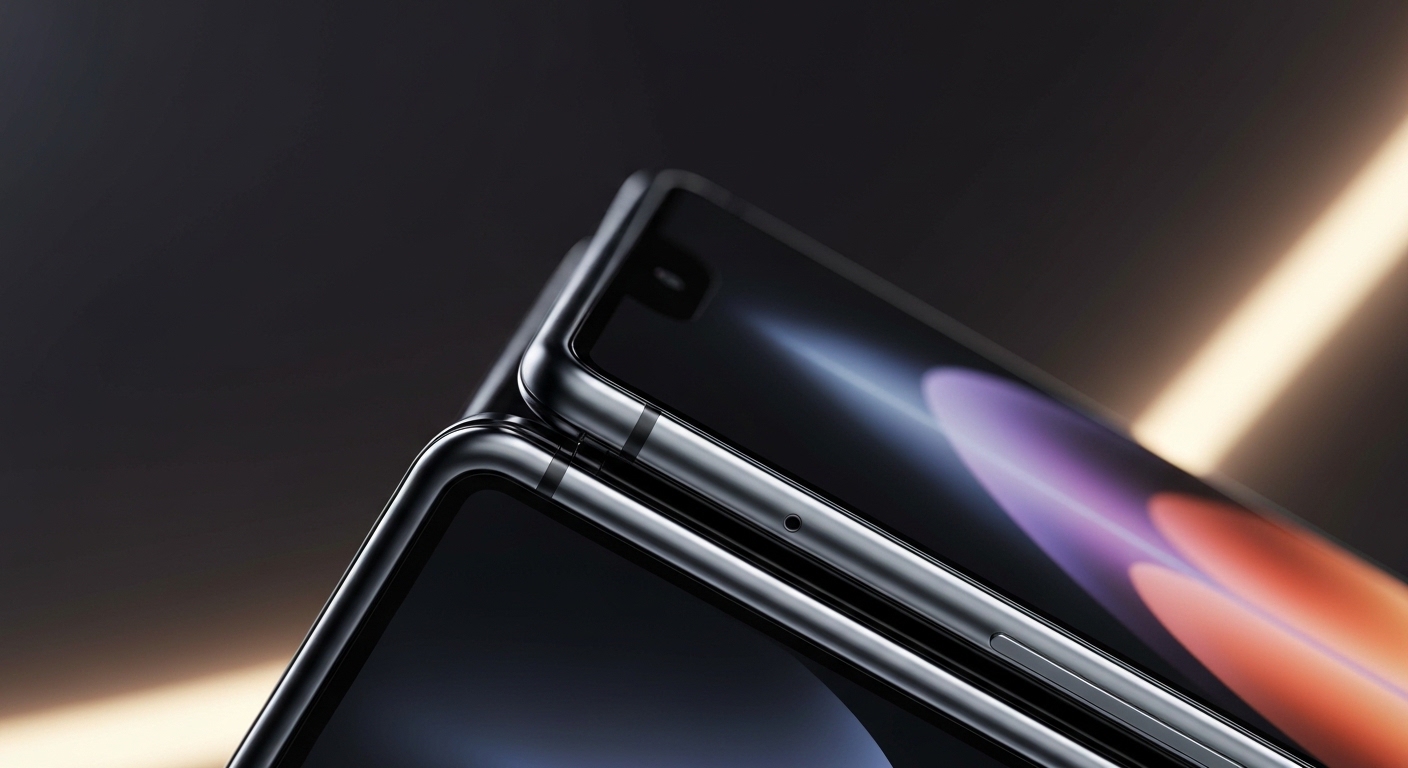
Samsung's latest foldable models, the Galaxy Z Fold 6 and Z Flip 6, feature design improvements including wider screen proportions and refined hinge engineering that address previous usability concerns about narrow proportions and visible creasing. Samsung has continued iterating on foldable design since the original 2019 launch. (Samsung foldable phone design explained below.)
For five years, Samsung's foldable phones carried a visible challenge. The original Galaxy Fold arrived in 2019 with a noticeable crease on the display. Samsung has spent subsequent years engineering improvements to reduce this effect through advances in materials and hinge design. Recent Samsung foldable phone designs represent meaningful progress toward minimizing the crease visibility that characterized earlier models.
Foldable display evolution: design improvements over time
The original Galaxy Fold launched in 2019 with a visible crease on the display. Over subsequent generations, Samsung has worked to reduce the prominence of this crease through materials science and mechanical engineering improvements. Each new iteration has reportedly brought refinements to the display folding mechanism.
-body-img" style="margin:2rem 0;text-align:center;">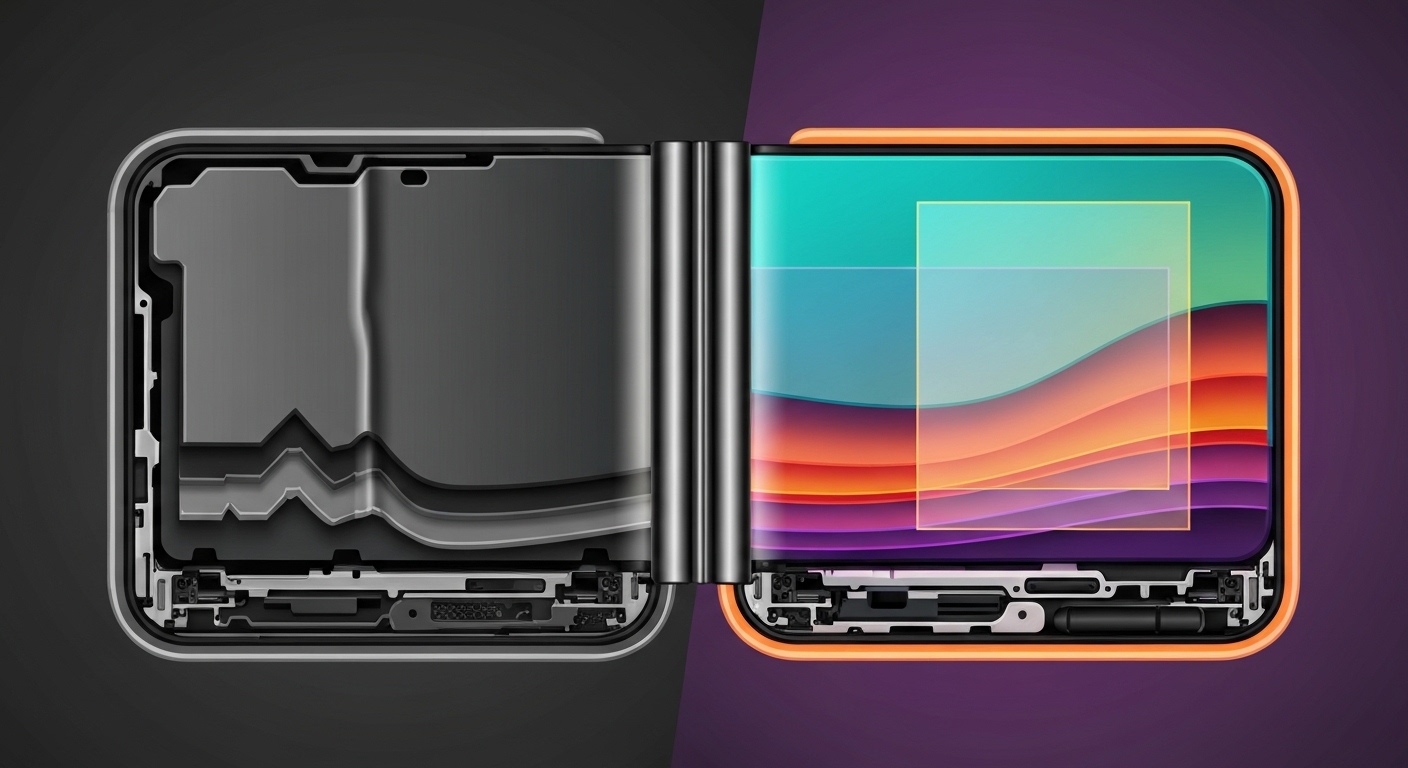
Samsung knew this. They did not pretend otherwise. What they did instead was engineer relentlessly. The Galaxy Z Fold 2 in 2020 brought improvements to crease visibility and durability. The Z Fold 3 and Z Flip 3 in 2021 introduced refined hinge mechanics that reduced crease prominence. By 2022, the Z Fold 4 was applying advanced materials and tension optimisation to the problem. The Z Fold 5 in 2023 reportedly marked the company's most significant crease reduction to date — until the Z Fold 6 arrived in 2024 with multi-layer film technology that pushed the crease depth down to approximately 0.1mm.
To put that in perspective: 0.1mm is roughly the thickness of a human hair. You can still see it under certain light conditions. But you stop noticing it in about three days of normal use. (Ask anyone who owns one. They'll tell you the crease stopped bothering them around the time they stopped reading reviews about it.)
Galaxy Z Fold 8 design changes: what actually changed
The Z Fold 8 design is not a modest refresh. Based on leaked images and early reports, Samsung has made the inner display meaningfully wider — correcting what many users identified as the most practically annoying aspect of previous models. The narrow, almost square inner screen on earlier Z Folds made one-handed typing feel like attempting to text on a Post-it note.
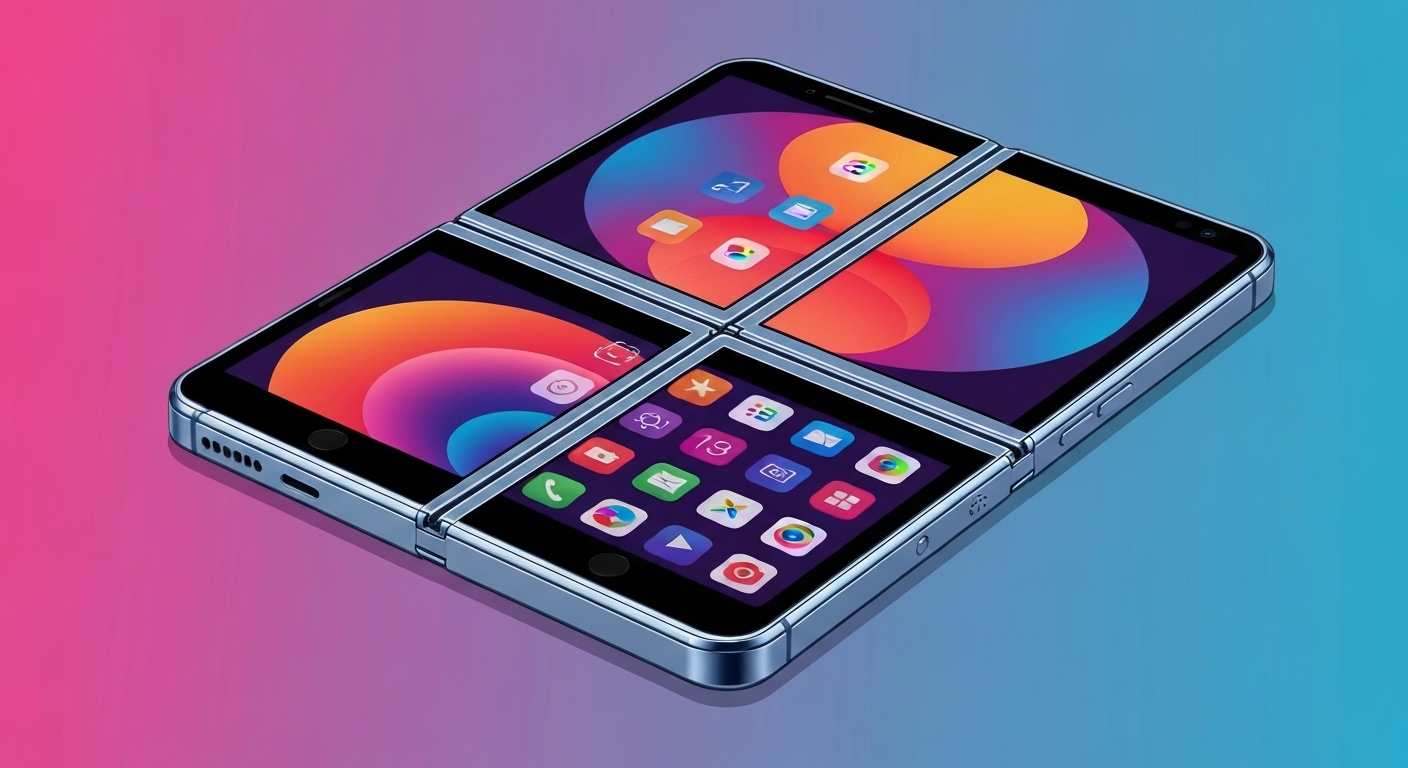
The bezels have been reduced substantially. The aspect ratio has shifted. The overall proportions now sit closer to a conventional Android tablet experience when unfolded, which was the whole point of paying flagship-plus money in the first place. This is the Galaxy Z Fold design overhaul that reviewers have been requesting since approximately the second day the original launched.
Release timeline reporting places the Z Fold 8 launch in the second half of 2025, consistent with Samsung's established annual foldable cadence.
Wide and Ultra model variants: Samsung bets on two lanes
Samsung has reportedly expanded the Z Fold 8 lineup to include a standard Wide model and an Ultra variant. This mirrors the strategy used in the Galaxy S series — give consumers a choice between refined and flagship-on-steroids, rather than forcing everyone into the same package.
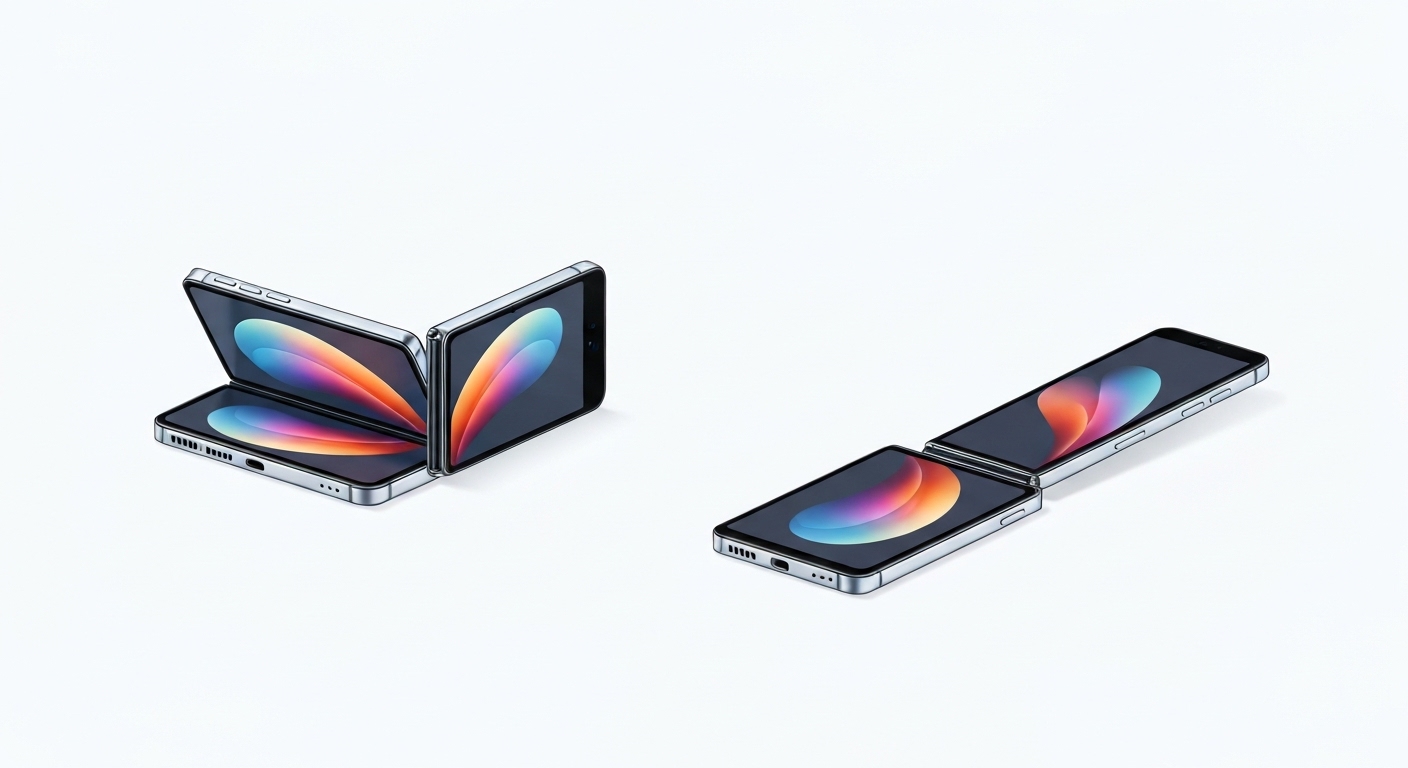
The Wide variant reportedly emphasises the broader display format, making it the natural successor for users who felt previous Z Folds were too narrow for comfortable media consumption or productivity. The Ultra variant is expected to push further on camera hardware and processing capability.
Two models also means Samsung can address two different buyer psychologies. Some people buy foldables because they want a phone that unfolds into a tablet. Others buy them because they want the best possible hardware regardless of form factor. Fair enough — both reasons are legitimate.
Screen specifications: the numbers that matter
Specific final screen specifications for the Z Fold 8 are based on leaked reports at time of writing. What the leaks consistently indicate is a wider inner display — a genuine change in aspect ratio rather than a marginal millimetre tweak. The cover screen is also reportedly benefiting from reduced bezels, making the folded-closed experience feel more like using a conventional flagship phone.
Samsung's foldable displays use ultra-thin glass (UTG) over a polymer layer — a construction that has improved with each generation. The multi-layer film stack reportedly used in the Z Fold 6 and continuing into the Z Fold 8 is what gets the crease depth down to that 0.1mm figure. Each layer serves a purpose: impact absorption, crease mitigation, display protection. It's less "phone screen" and more "engineering sandwich."
Samsung foldable hinge design: the engineering no one talks about
The hinge is the soul of every Samsung foldable. It is also the part that gets the least column inches, because hinges are not glamorous. Nobody posts an unboxing video of a hinge. (Well. Someone probably has. The internet is vast.)
The Samsung foldable hinge design has evolved from a mechanism that required a gap between the two display halves — allowing the inner screen to fold without cracking — to one that achieves a near-flat closure. Earlier models had a visible gap when closed. The Z Fold 5's teardrop hinge design allowed for a fully flat fold, eliminating that gap entirely. The Z Fold 8 reportedly builds on this architecture.
The hinge mechanism also manages tension across the display. Too tight and the screen cracks. Too loose and the crease worsens. Samsung's engineering teams reportedly iterate on this balance continuously, which is one reason why crease depth has halved over successive generations without a single dramatic public announcement. They just quietly solved it, one generation at a time.
Z Fold 8 vs previous models: the honest comparison
The Z Fold 5 was a good phone with a narrow problem. The Z Fold 6 was a slightly wider phone with an improved crease. The Z Fold 8 appears to be the first model where the form factor stops making compromises that require explaining to non-enthusiast friends.
If you own a Z Fold 3 or earlier, the upgrade case is obvious. If you own a Z Fold 5, the wider display alone may be worth it depending on how much you use the inner screen. If you own a Z Fold 6, you're probably fine to wait. Rule of thumb: if the narrow aspect ratio frustrated you on your current model, the Z Fold 8 addresses that directly.
Wider is actually different: real-world usability implications
Here's the edge that most spec comparisons miss. A wider inner display is not just a bigger number in a table. It changes how you hold the device, how you type, how you consume video, and whether you actually reach for the phone or leave it in your pocket.
Previous Z Fold inner screens produced a roughly square aspect ratio when unfolded. Square displays are awkward for almost everything: video is letterboxed, typing requires two-handed precision, and spreadsheets feel like you're working on a folded napkin. A wider display — closer to a 4:3 or better tablet ratio — means video fills more screen, typing feels natural, and documents look like documents rather than thumbnails.
This is not a trivial change. It's the difference between a foldable that you use as your main device and one that lives in a drawer next to your 2016 iPad Mini. Samsung reportedly holds approximately 70-80% market share in global foldables. If the Z Fold 8 converts even a portion of the "interesting but not practical" crowd, that market — reportedly around 9-10 million units annually by 2023 — grows substantially.
Manufacturing challenges Samsung quietly solved
Making a wider foldable display is harder than it sounds. Wider panels require different tension management across the fold axis. More surface area means more potential stress points. The adhesive layers that hold the UTG to the polymer film need to account for a longer fold radius.
Samsung's display division — one of the few operations in the world capable of manufacturing these panels at scale — has reportedly invested billions annually in foldable display R&D. The result is not just a better crease. It's a manufacturing process that can produce consistent, reliable panels at volumes that support a mass-market product rather than a collector's item.
The Samsung folding phone build quality improvements are cumulative. Each generation inherits the manufacturing refinements of the last. The Z Fold 8's wider display is only possible because five generations of engineers worked out how to fold a screen reliably before anyone tried to make it wider.
Z Fold 8 vs rollable alternatives: Z Slide, Z Roll
Samsung's rumoured rollable concepts — reported under names like Z Slide and Z Roll — represent a fundamentally different approach to the expandable display problem. Instead of folding, rollable phones extend the display laterally by unfurling from a cylindrical housing.
The advantage of rollable designs is the absence of a crease. There's no fold axis, so there's no fold ridge. The disadvantage is engineering complexity in a different direction: the retraction mechanism, display durability under repeated rolling, and the form factor when closed (typically thicker or wider than a conventional phone).
Samsung's foldable design — particularly the Z Fold 8 — answers the rollable challenge not by eliminating the crease entirely but by making it irrelevant through practical usability gains. If the crease is 0.1mm deep and the display is wide enough to be genuinely useful, the philosophical advantage of "no crease" becomes a much smaller selling point. Nine times out of ten, buyers will choose proven over perfect.
Samsung's foldable design strategy: what the Z Fold 8 signals
Samsung is not iterating randomly. The Z Fold 8 wider screen design, the two-variant lineup, the continued crease reduction — these are deliberate signals. Samsung is repositioning foldables from premium novelty to premium practical.
The Galaxy Z Flip design continues to serve a different function: compact, fashion-forward, clamshell. The Z Fold line is where Samsung makes the productivity argument. A wider Z Fold 8 inner screen is Samsung saying, directly, that foldables are ready to replace your laptop for light tasks. That's a bigger claim than it appears on a spec sheet.
Cost-benefit reality: is the Z Fold 8 redesign worth it for you
Here's the strong opinion this article owes you: if you have been waiting for foldables to become practical rather than impressive, the Z Fold 8 is probably the inflection point. Not because of any single spec. Because the accumulated engineering improvements — narrower crease, wider display, flat-fold hinge, improved build quality — have arrived at the same generation simultaneously.
If, on the other hand, you use your phone primarily for calls, messaging, and occasional scrolling, a foldable at flagship-plus pricing is not for you. The design improvements are real. The use case still requires you to actually unfold the phone regularly to justify the premium. A wider screen you never open is still just a very expensive cover screen.
Tell your friends who ask: buy the Z Fold 8 if you actually want a phone that works like a tablet. Skip it if "tablet mode" sounds like something you'd try once in an airport and never again.
What makes Samsung foldable phone design unique?
Samsung's foldable design combines ultra-thin glass (UTG) over a polymer layer stack, a proprietary hinge mechanism that manages fold tension, and a multi-layer film construction that reduces crease depth. Samsung reportedly holds approximately 70-80% of the global foldable market — which means they've had more attempts than anyone else to get this right. Practice makes crease-less, apparently.
Why do Samsung foldable phones have a crease?
The crease is a physical consequence of bending a display panel repeatedly along the same axis. The display materials — even ultra-thin glass — develop a memory of the fold position. Samsung has reduced crease depth to approximately 0.1mm on recent models through advanced materials and tension management, but it cannot be eliminated entirely without moving to a fundamentally different display technology like rollable panels.
How does the Samsung foldable hinge work?
Samsung's hinge uses a multi-component mechanism that distributes fold stress evenly across the display rather than concentrating it at a single point. The teardrop hinge design introduced in the Z Fold 5 allows the display to curve naturally during folding rather than bending at a sharp angle. This achieves a flat closure without a gap and reduces the visible crease. It's precisely engineered and, frankly, underrated as a piece of hardware.
Galaxy Z Fold vs Galaxy Z Flip: which design is better?
They solve different problems. The Galaxy Z Fold design prioritises inner screen real estate — it's a phone that unfolds into a small tablet. The Galaxy Z Flip design prioritises compactness — a conventional-screen phone that folds in half to fit in a pocket. If productivity and display size matter, Z Fold. If pocketability and aesthetics are the priority, Z Flip. "Better" depends entirely on what you're trying to do.
How much does a Samsung foldable phone cost?
Samsung foldable phones sit at the top of the flagship pricing tier. Exact Z Fold 8 pricing had not been officially confirmed at time of writing. Previous Galaxy Z Fold models have launched at premium price points reflecting the display manufacturing complexity and R&D investment involved. Rule of thumb: budget for more than a standard flagship and less than a good used car.
Are Samsung foldable phones good for beginners?
Honest answer: probably not as a first smartphone. The form factor requires learning two usage modes — cover screen and inner display — and the care requirements (screen protector awareness, hinge maintenance) add a layer of consideration that standard phones don't. For someone comfortable with Android who actively wants the tablet experience, yes. For a first smartphone buyer, a conventional flagship is a more forgiving starting point.
What materials are used in Samsung foldable screen design?
Samsung's foldable display stack includes ultra-thin glass (UTG) as the top layer, a polymer film underneath for flexibility and impact absorption, and multiple adhesive layers that bond the construction together while managing fold stress. The protective layer stack has grown more sophisticated with each generation, which is the primary reason crease depth has dropped from a clearly tactile ridge in 2019 to approximately 0.1mm in recent models.
Are Samsung foldable phones durable enough for daily use?
By the Z Fold 6 generation, yes — with reasonable care. Samsung has improved water resistance, hinge durability, and display robustness significantly since the original Galaxy Fold. The display protector layer should not be removed (a mistake some first-time owners make). Treat it like a premium device rather than a tank and it holds up to daily use reliably. The engineering has caught up to the ambition.
How does the Z Fold 8 wider design compare to rollable phone concepts?
Rollable phones like Samsung's rumoured Z Slide or Z Roll eliminate the crease problem entirely by extending the display laterally rather than folding it. The trade-off is different mechanical complexity and a form factor that's less proven at scale. The Z Fold 8's wider design reduces the crease's practical impact to the point where the rollable advantage — "no crease" — becomes a smaller differentiator. Most buyers will choose refined over experimental.
The crease was never the real problem
The crease was a symptom. The real problem was that foldable phones asked you to pay a premium for a compromise — a screen that bent but wasn't wide enough to justify bending. Samsung's Samsung foldable phone design evolution from 2019 to the Z Fold 8 is a story of engineering patience: reduce the crease a fraction of a millimetre per generation, widen the display when the manufacturing catches up, and eventually arrive at a device that works the way the concept always promised it would.
Five years. Approximately 0.1mm. Worth the wait — assuming you actually unfold it.