
Key Takeaways
- Alphonso Davies is available for Canada's World Cup squad despite injury concerns, but his playing time is strategically managed
- Davies' defensive impact reshapes Canada's entire tactical structure—the team plays fundamentally differently with or without him
- His journey from Liberian refugee camp to Champions League winner with Bayern Munich is one of football's greatest success stories
- The real question isn't whether Davies plays, but whether a fully-fit Canada formation built around his absence might actually be more effective
- As Canada's captain, Davies carries the defensive identity of an entire nation on his shoulders
Alphonso Davies, Canada's captain, is available for the World Cup but his playing time has been managed due to injury concerns and tactical decisions by the coaching staff. Rather than a simple yes-or-no question, the critical analysis lies in how Canada's defensive structure and World Cup strategy evolves depending on Davies' availability and match fitness.
The Weight of a Nation on One Left Boot
Few players carry the defensive identity of an entire country the way Alphonso Davies does for Canada. But the real story isn't whether he plays. It's what happens to Canada when the coaching staff has to think twice before they put him on the pitch.

Born reportedly in a refugee camp in Guinea in 2000, Davies went from Liberian refugee to Champions League winner in about 20 years. (If that doesn't put your bad week into perspective, I don't know what will.) His journey to Bayern Munich via Vancouver Whitecaps is the kind of football fairy tale that gets made into a documentary — and probably already has been.
This article covers his stats, his Alphonso Davies Bayern Munich contract, his injury history, his role as Canada's captain, and the tactical question nobody is asking loudly enough: is Canada actually better with a half-fit Davies, or a fully fit formation built around his absence?
From Refugee Camp to Bundesliga: The Short Version
Davies' family reportedly immigrated to Canada in 2009. He started playing youth soccer, signed with Vancouver Whitecaps FC's academy reportedly around 2016, and made his MLS debut at approximately age 16 in 2017. That alone made him one of the youngest players to appear in MLS.
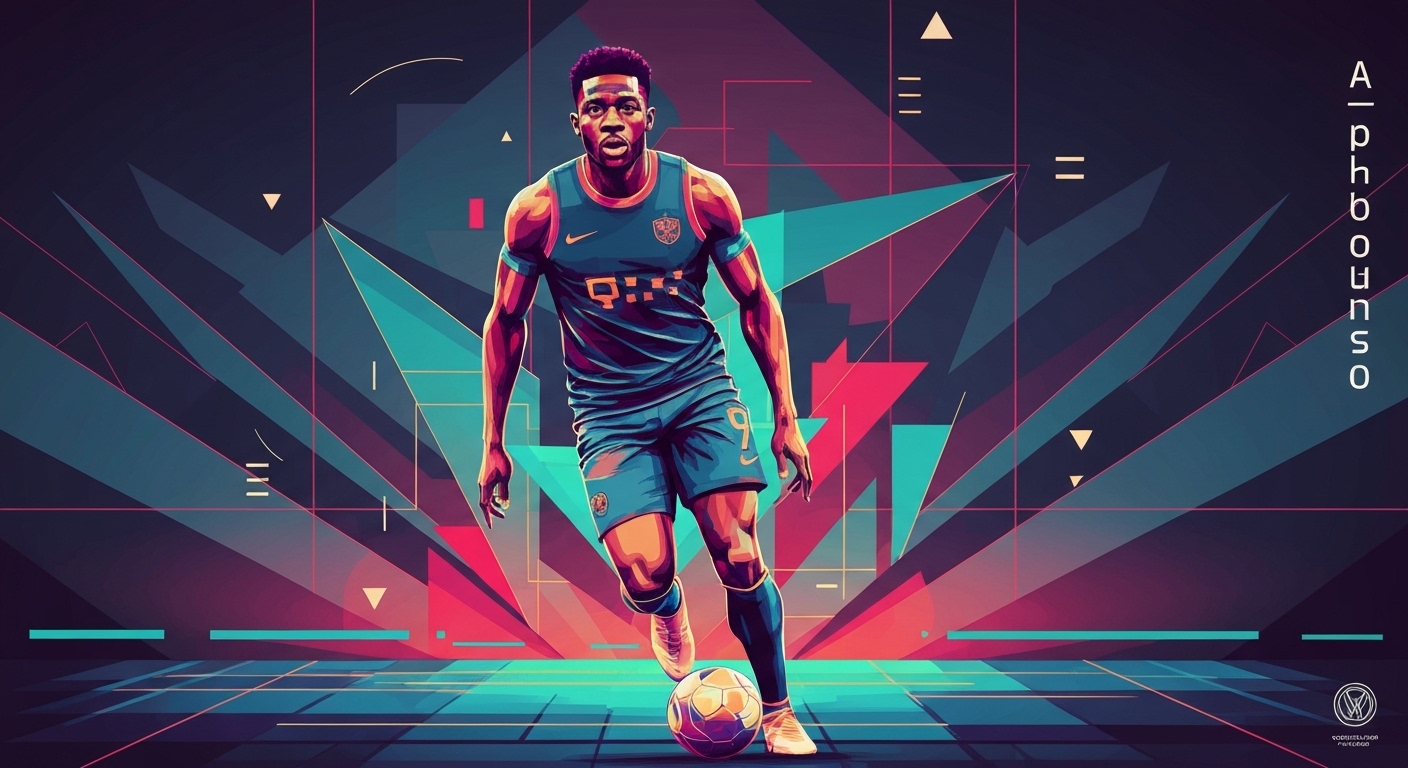
Then Bayern Munich came calling. The transfer was reportedly valued around $22 million — which, for a teenager from Vancouver, is not a normal Tuesday.
By 2019 he'd won the Bundesliga and the DFB-Pokal. By 2020 he was named in the FIFA Team of the Year and had a Champions League medal. By 2021 he was sidelined with an ACL injury that reminded everyone — including Davies himself — that football careers are fragile things.
He's since returned. But the injury left a mark, not just physically.
Alphonso Davies Stats — What the Numbers Actually Say
According to reports, Davies had accumulated over 50 appearances for Bayern Munich across all competitions by 2021. He reportedly holds a 90%+ pass completion rate across several Bundesliga seasons — which, for a left-back who plays like a winger with a jetpack, is genuinely impressive.
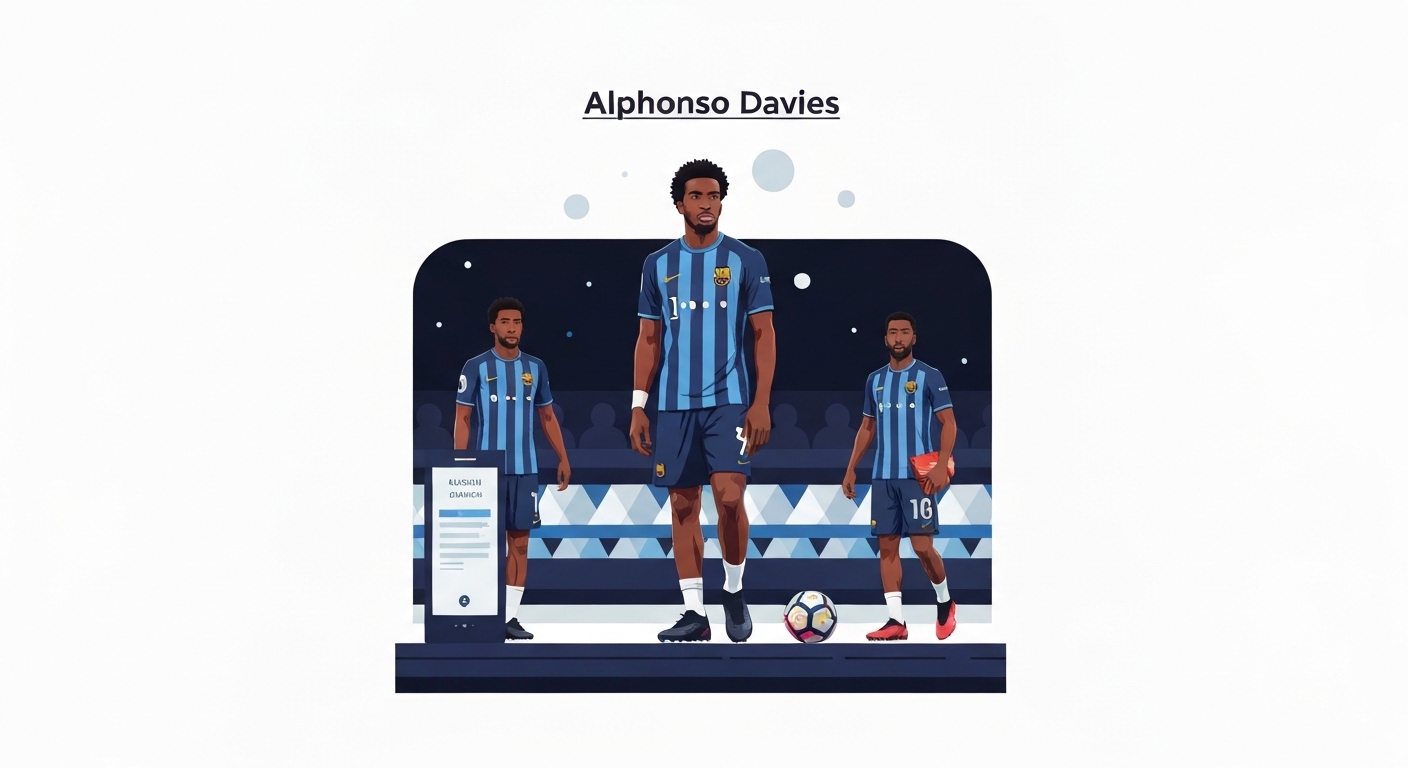
For the Alphonso Davies Canada national team, he reportedly has 40+ caps. His goal tally at club level sits at approximately 3-5 goals through 2021, but that undersells him. Davies' value is measured in metres covered, overlaps made, and opposition wingers quietly regretting their career choices.
His speed is often cited as elite. Reportedly clocked at speeds that put him among the fastest players in world football, he combines raw pace with technical ability in a way that makes him genuinely difficult to plan around. (The fact that defenders have to account for him even when he's operating at 80% fitness tells you everything.)
The Injury Timeline That Changed Everything
The 2021 ACL injury was the pivot point. Before it, Davies was on a trajectory that had analysts comparing him to the best left-backs in world football. After it, the conversation shifted: can he stay healthy long enough to reach that ceiling?
The coaching staff at Bayern Munich and Canada have both, reportedly, been careful with his minutes since the return. That caution is completely reasonable. ACL recoveries are not linear, and the risk of re-injury in the 12-18 months following return to play is well-documented according to sports medicine literature. It's not pessimism. It's maths.
For the World Cup context, Canada's staff managing Davies' playing time isn't a red flag. It's arguably the smartest thing they can do. A 70% Davies across five games beats a 100% Davies who breaks down in the group stage.
Canada Without Davies Is a Different Team Entirely
Here's the uncomfortable truth the pre-tournament coverage glosses over: Canada's identity is partially built around what Davies does from left-back. When he's absent or restricted, the entire shape of the team has to shift.
Without his overlapping runs, Canada loses the left-channel threat that forces opposition defenders to make a choice. Cover the overlap or hold the line? Davies makes that question unanswerable. Without him, it becomes answerable — and that matters enormously in tournament football where margins are tiny.
Reportedly, Canada's results in qualifying showed a noticeable difference in attacking output when Davies was either absent or operating below match fitness. The team can still compete — they proved that in CONCACAF qualifying — but they're a more predictable side. And predictable is exactly what you don't want to be at a World Cup.
Davies' Specific Tactical Contributions to Canada's Formation
Canada have operated in a 3-4-3 / 3-5-2 hybrid under their coaching setup, and Davies' role in that is not simply "left wingback — run fast." It's more layered than that.
When Davies pushes high, he effectively creates a 4v3 situation on Canada's left side. The centre-backs can hold a back three because Davies' positioning means the opposition right winger has to track back. That one positional choice by Davies changes the defensive arithmetic for the entire team.
He also acts as a pressure release valve. When Canada are building from the back under pressure, Davies offers a wide option that can immediately switch the play or carry the ball into space at a speed that breaks the opposition press. For a team that isn't yet one of the world's top ten, having a built-in press-breaker at left-back is a significant tactical asset.
When he's restricted to 60 or 70 minutes, Canada's coaching staff has to decide: do they use him early to establish the left-channel threat and then consolidate, or hold him for the second half when legs tire? Either call has merit. Neither is wrong. But both confirm the same thing — Davies shapes Canada's tactical decisions even before kickoff.
The Psychological Game Nobody's Covering
Coming back from an ACL injury at the highest level of football is not just physical. Ask any player who's done it. The moment you take your first full-speed challenge after a year on the physio table, something in your brain hesitates. It's involuntary. It's also potentially career-defining.
Davies, by all accounts, has approached his return with the same mentality that got him from a refugee camp to the Champions League. But the mental load of a World Cup — your nation watching, the pressure of the captaincy, the weight of being the player everyone talks about — is not nothing.
The fact that Canada's staff are managing his minutes carefully is, in part, a psychological consideration too. They're protecting him from situations where he might push through pain or fatigue out of sheer will, only to pay for it later. That's not babying a star player. That's understanding how elite athletes actually work.
Captaincy adds another layer. Davies reportedly wears the armband for Canada, which means even when he's on the bench, he's working. Leadership at a World Cup isn't a part-time job.
The Bayern Munich Contract: What We Know
The Alphonso Davies contract with Bayern Munich was reportedly extended, with figures cited around €200,000+ per week as of 2021. For context, that's the kind of number that makes your mortgage weep quietly in the corner.
There has been ongoing speculation about his long-term future at the club, particularly as European giants reportedly circle. Davies has been linked with moves elsewhere, though Bayern's reported contract offer suggests they're not interested in letting him leave easily.
Whether Davies eventually moves on will depend on his form, his fitness, and what Bayern's rebuild looks like over the next few seasons. But right now, he remains a Bayern player — and one of the highest-profile Canadians in professional football history.
Canada Captain: Leadership Beyond the Left Flank
The captaincy is worth unpacking. When Canada named Davies as captain, it wasn't just symbolic. It was a statement about the kind of team they want to be — one built around a player whose story mirrors the immigrant experience of millions of Canadians.
His presence, even in a limited role, changes the dynamic in the dressing room. Players perform differently when the guy with the armband has done something genuinely extraordinary to get there. It's not inspiration by press release. It's the real thing.
Canada's World Cup strategy is, in part, built around managing that leadership asset as carefully as the physical one. A Davies who's fresh, focused, and trusted to make decisions — on and off the pitch — is worth more than a Davies who's been run into the ground by the group stage.
Who is Alphonso Davies?
Alphonso Davies is a Canadian professional footballer who plays as a left-back and winger for Bayern Munich and captains the Canadian national team. Born reportedly in a refugee camp in Guinea in 2000 to Liberian parents, he immigrated to Canada in 2009. He became one of the most recognisable players in world football after winning the UEFA Champions League with Bayern Munich in 2020.
What position does Alphonso Davies play?
Davies plays primarily as a left-back, but his pace and technical ability mean he regularly operates as a left winger in attack. He's essentially a full-back who forgot that full-backs are supposed to stay back. At Bayern Munich, his role involves heavy involvement in both defensive duties and attacking overlaps, making him one of the most dynamic players in that position globally.
How fast is Alphonso Davies?
Davies is reportedly among the fastest players in world football. His speed has been clocked at elite levels during Bundesliga matches, and he's been compared to sprinters rather than footballers in terms of raw acceleration. His pace isn't just decorative — it's a tactical weapon that forces entire opposition teams to reorganise their defensive shape around his potential runs.
Is Alphonso Davies better than Theo Hernandez?
Reckon this one comes down to what you value. Hernandez is arguably more physical and goal-direct. Davies offers superior pace and press-breaking ability. Both are world-class left-backs in their prime. Davies has the edge in raw speed; Hernandez arguably in end product. In a straight shootout, it's genuinely too close to call — which is a good problem for both of their clubs to have.
How much is Alphonso Davies worth?
Transfer valuations vary, but Davies has been reportedly valued in the range of €70–90 million in peak windows. His contract at Bayern Munich was reportedly extended at around €200,000+ per week as of 2021. Given his age, his profile, and his Champions League pedigree, he remains one of the more valuable left-backs in world football — injuries notwithstanding.
Where was Alphonso Davies born?
Davies was reportedly born in a refugee camp in Buduburam, Guinea, in 2000. His parents are Liberian. His family immigrated to Canada reportedly in 2009, where he eventually developed as a footballer through Vancouver Whitecaps FC's youth academy. It's the kind of origin story that makes you reconsider any complaint you've ever had about a long commute.
What teams has Alphonso Davies played for?
Davies has played for Vancouver Whitecaps FC in MLS, where he made his debut reportedly at around age 16 in 2017, and Bayern Munich, where he transferred in a deal reportedly valued at approximately $22 million in 2018. He also represents Canada at international level, where he captains the national team and has earned reportedly 40+ caps.
Will Alphonso Davies leave Bayern Munich?
Speculation has been ongoing, with several European clubs reportedly linked. Bayern Munich's reported contract extension suggests they want to keep him. Davies himself has not publicly pushed for an exit. The honest answer: nobody outside that dressing room knows for certain. But a player with his profile, his age, and his Champions League medals tends to attract serious interest — and Bayern know that better than anyone.
What is Alphonso Davies' injury history?
The most significant injury in Davies' career was a reported ACL injury in 2021, which sidelined him for an extended period. Since returning, his minutes have been carefully managed at both club and international level. Sports medicine research consistently shows that ACL recovery requires patience well beyond the initial return-to-play date — which is why Canada's cautious approach with Davies makes complete tactical sense.
The Bottom Line on Alphonso Davies
Davies isn't just a fast left-back with a great story. He's a tactical system in a pair of boots. When Canada have him at full fitness, they play a different game. When they don't, the entire shape and ambition of the team has to recalibrate.
The injury management isn't weakness. The minute restriction isn't panic. It's a coaching staff treating their best asset with the kind of long-term thinking that wins tournaments rather than just group stage games.
His numbers — 40+ caps, Champions League winner, 90%+ pass completion, reportedly one of the fastest players alive — tell part of the story. The refugee camp in Guinea tells the rest. Few careers in world football carry as much weight, in every sense of that word.
Canada's World Cup fortunes are tied, at least partly, to how smart they are about deploying him. Not just whether he plays — but when, for how long, and in what shape. Get that right, and Davies could be the player that defines Canadian football for a generation.
Get it wrong, and they'll be having a very different conversation. One that, for once, no amount of pace can outrun.