Key Takeaways
- Mustafa Kemal Atatürk (1881-1938) led the Turkish War of Independence and founded the Turkish Republic in 1923
- He abolished the Ottoman sultanate and caliphate, transforming a 600-year empire into a secular nation-state
- Major reforms included replacing Arabic script with Latin alphabet, secularizing education and law, and implementing Western-style governance
- Atatürk remains a polarizing figure in Turkey nearly 90 years after his death, with his legacy still heavily debated
- Few leaders transformed a nation as rapidly and comprehensively in the 20th century
Mustafa Kemal Atatürk (1881-1938) was the military commander and first president of the Turkish Republic who led the nationalist movement against occupying Allied forces and transformed the Ottoman Empire into a modern, secular nation-state. He implemented sweeping constitutional, educational, social, and cultural reforms that reshaped Turkish society and built the foundation for contemporary Turkey's governance and national identity.
Who was Atatürk, really
Short answer: the founder of Turkey. Longer answer: a career soldier who became a revolutionary, then a statesman, then — depending who you ask — either a national saint or a controversial strongman who didn't love dissent. All of that can be true at once. That's kind of the point of this article.
Mustafa Kemal Atatürk led the nationalist resistance after the Ottoman Empire collapsed following World War I, then spent the next fifteen years as president dragging the new republic toward a Western-style, secular model of statehood. According to historical accounts, the reforms he pushed through touched nearly everything — the alphabet, the legal code, the clothes on people's backs, even the calendar on the wall. Nine times out of ten when someone asks "who was Atatürk," the honest answer is: the guy who decided an empire wasn't working and built a republic instead.
From Thessaloniki schoolboy to army officer
He was reportedly born in 1881 in Thessaloniki, then part of the Ottoman Empire, now part of Greece. Ottoman borders moved around a lot back then — one more reason the empire eventually ran out of road.
He completed his military education at the Ottoman War College, reportedly graduating in 1905. Military school in the late Ottoman period wasn't just marching and rifles — it was where a lot of future reformers first got exposed to European political ideas, nationalism, and the growing sense that the empire was falling behind. Mustafa Kemal came out of that system sharp, ambitious, and — by most accounts — not shy about telling superiors when he thought they were wrong. Which, fair enough, turned out to be a useful trait for a man about to rebuild a country from scratch.
Gallipoli made his name
If you want the moment Mustafa Kemal stopped being just another officer and started being a name people remembered, it's 1915 and the Gallipoli campaign. He reportedly commanded forces during the battle that stopped Allied troops from taking the Dardanelles and knocking the Ottomans out of World War I early.
Gallipoli was a bloodbath for both sides — Australian, New Zealand, British, and French forces on one side, Ottoman defenders on the other. But the Ottoman defense held, and Mustafa Kemal's role in that defense reportedly turned him into a household name across the empire. War is rarely a career-builder. This was the exception.
The Turkish War of Independence
The Ottoman Empire came out of World War I on the losing side, and the peace terms were brutal — Allied powers carving up Anatolia, occupying zones, the whole works. In 1919, Mustafa Kemal reportedly initiated what became the Turkish War of Independence, rallying nationalist resistance against both the occupying Allied forces and the weakened, compliant Ottoman government in Istanbul.
The war reportedly lasted around three to four years, from 1919 to 1923. Mustafa Kemal is reported to have led forces estimated at approximately 300,000 — no small operation, especially for a movement that started as a nationalist resistance rather than a state army. The campaign pushed back Greek forces in western Anatolia and forced the Allied powers to the negotiating table, eventually leading to the Treaty of Lausanne in 1923, which recognized Turkish sovereignty over Anatolia and eastern Thrace.
This is the bit people underestimate: the war wasn't just about kicking out occupiers. It was the opening act for everything that came after. Win the war, and you get to write the rules for what comes next. Lose it, and there's no republic to reform in the first place.
1923: the Republic is born
Mustafa Kemal reportedly declared the establishment of the Turkish Republic in 1923 and was elected as its first president. This is the year most Turkish history textbooks treat as year zero — the formal end of six centuries of Ottoman rule and the start of something genuinely new.
He served as president for approximately 15 years, from 1923 until his death in 1938. That's a long enough runway to not just declare a republic on paper, but actually rebuild its institutions from the ground up — which is exactly what he spent the next decade and a half doing.
The reforms — abolishing an empire's DNA
This is where Atatürk's history gets genuinely wild in scope. In 1924, he reportedly abolished the Ottoman Sultanate and the Caliphate — the religious-political office that had, in theory, given the Ottoman sultan authority over Muslims well beyond Turkey's borders. Scrapping the Caliphate wasn't just a domestic political move. It sent shockwaves through the wider Muslim world.
Then in 1928 came the Alphabet Reform — replacing the Arabic script with the Latin alphabet for writing Turkish. Imagine your entire country's literacy, from newspapers to street signs to schoolbooks, switching scripts within a few years. It reportedly worked, largely because Atatürk paired it with a national literacy push, touring the country himself with a blackboard to teach the new letters. A man teaching an entire nation its ABCs. Genuinely hard to overstate how disruptive — and how effective — that was.
Beyond the headline reforms, the broader program reportedly included:
- Secularizing the legal system, moving away from religious law toward civil codes modeled on European systems
- Overhauling education to be state-run and secular rather than religious
- Reforms affecting dress and public life, including discouraging traditional headwear like the fez in favor of Western-style clothing
- Extending political rights, including women's suffrage, ahead of several Western European nations at the time
- Adopting the Western (Gregorian) calendar and other administrative modernizations
Put it all together and you've got a government that, in roughly a decade, tried to rewire the legal system, the writing system, the education system, and the dress code all at once. Most governments struggle to reform one ministry. Atatürk went for the full set.
Where the name "Atatürk" actually came from
Here's the bit most quick explainers skip. "Atatürk" isn't a name he was born with — it means, roughly, "Father of the Turks." It was a surname granted to him in the late 1930s once Turkey introduced a Western-style surname law, replacing the old Ottoman system of titles and patronymics.
So technically, for the first several decades of his life and most of the war years, nobody called him "Atatürk" — he was Mustafa Kemal, then Mustafa Kemal Pasha. The name only became attached to him near the very end of his life, which means the man spent almost his entire career building the reputation before the title caught up with him. Feels like the opposite of how most branding works these days.
Death, legacy, and the cult of Atatürk
Mustafa Kemal Atatürk reportedly died in office in Istanbul in 1938. He'd spent roughly fifteen years reshaping the republic he founded — not a bad shift for one man, even if you're only counting the presidency and not the war years before it.
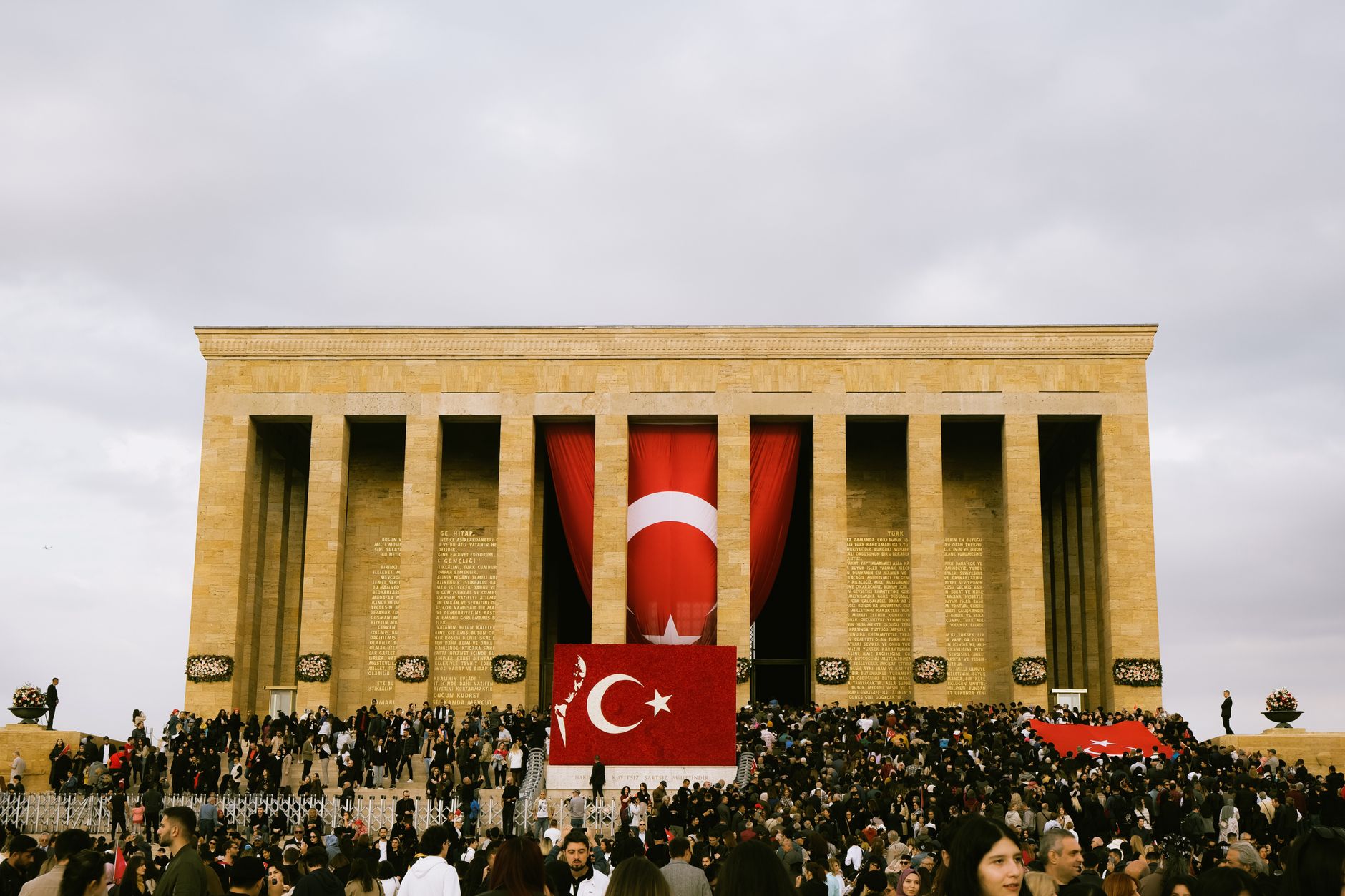
His legacy is baked into modern Turkey in ways that go beyond the history books. His portrait is in government offices, classrooms, and plenty of private homes. The principles associated with his reforms — often grouped under the term "Kemalism" — remained the foundational ideology of the Turkish state for decades, covering secularism, nationalism, republicanism, and state-led modernization. Turkish law reportedly still criminalizes insulting his memory, which tells you something about how seriously the state treats his legacy even today.
The uncomfortable question nobody skips forever
Here's my honest take, and I'll back it with the numbers rather than just vibes: Atatürk was more effective as a state-builder than almost anyone else in the 20th century, and that effectiveness came directly from methods that don't fit neatly into "democratic hero" or "authoritarian strongman" boxes. Both labels get thrown around, and both miss the point.
Consider the pace. Abolishing a 600-year-old sultanate (1924), replacing an entire national alphabet (1928), rewriting the legal and education systems, extending suffrage to women years ahead of many Western democracies — all inside roughly a decade and a half in office. That speed is the opinion in itself. You don't get reform at that velocity through slow-moving parliamentary consensus. You get it through a single-party state with Atatürk and his Republican People's Party holding firm control, opposition parties suppressed, and dissent — including religious and Kurdish opposition movements — met with force on more than one occasion.
So was it worth it? If you're measuring by literacy rates, legal modernization, and the survival of Turkey as a unified, sovereign nation-state rather than a carved-up post-Ottoman patchwork, the reforms delivered results that are still standing today. If you're measuring by political pluralism and treatment of dissent during his presidency, the record is a lot messier. Don't let anyone sell you a version of Atatürk's history that's entirely one or the other — the honest read requires holding both at once.
One practical takeaway if you're studying this period: don't treat "modernizer" and "authoritarian" as mutually exclusive categories when reading about 20th-century nation-builders. Nine times out of ten, the two travel together.
Who was Mustafa Kemal Atatürk?
He was a military commander and statesman who led the Turkish nationalist movement after World War I, founded the Turkish Republic in 1923, and served as its first president until his death in 1938. Short version: the guy who turned an empire into a republic and didn't ask permission twice.
What did Atatürk do for Turkey?
He led the Turkish War of Independence, abolished the Ottoman sultanate and caliphate, secularized law and education, replaced the Arabic script with the Latin alphabet, and extended political rights including women's suffrage. Essentially, he rebuilt the country's operating system from the ground up.
How did Atatürk modernize Turkey?
Through rapid, state-driven reform across nearly every sector — legal codes modeled on Europe, secular state-run education, a new alphabet in 1928, Western dress norms, and a Gregorian calendar. He reportedly toured the country teaching the new alphabet himself, treating literacy as a national emergency rather than a slow-burn project.
What is the difference between Atatürk and the Ottoman sultans?
Ottoman sultans ruled as hereditary monarchs with religious authority as caliph; Atatürk abolished both the sultanate and caliphate in 1924 and built a secular republic instead. One system passed power down a bloodline for centuries — the other ended it, on paper, within a single year.
When did Atatürk found the Republic of Turkey?
He reportedly declared the Turkish Republic in 1923, following the Turkish War of Independence and the Treaty of Lausanne, and was elected its first president the same year.
Why is Atatürk important in Turkish history?
He's credited with founding the modern Turkish state, winning its war of independence, and pushing through reforms that still shape Turkish law, education, and national identity today. His face is on the currency and his name is legally protected from insult — that's how deep the significance runs.
What were Atatürk's major reforms and their impact?
Major reforms include abolishing the sultanate and caliphate (1924), the Alphabet Reform swapping Arabic script for Latin letters (1928), secularizing law and education, and extending suffrage to women. The impact: a literacy boom, a legal system rebuilt from scratch, and a national identity reoriented toward secular, Western-facing statehood.
Was Atatürk a dictator or a democratic leader?
Neither label fits cleanly. He ran a single-party state, suppressed opposition, and used force against some dissent, but he also implemented broad social reforms and extended political rights including women's suffrage. Most serious historians land somewhere between "authoritarian modernizer" and "reforming statesman" rather than picking one extreme.
Where did the surname "Atatürk" come from?
It was granted to him in the late 1930s under Turkey's new surname law and translates roughly to "Father of the Turks." He spent most of his career as Mustafa Kemal — the "Atatürk" name only attached near the end of his life.
How long did Atatürk serve as president of Turkey?
Approximately 15 years, from the founding of the Republic in 1923 until his death in 1938. That's roughly the length of time it takes some countries to finish arguing about a single piece of legislation.
The short version
Mustafa Kemal Atatürk took an empire that was running on fumes, won a war most people would've bet against, and then spent fifteen years rebuilding the whole country's operating system — alphabet included. Whatever side of the "hero or strongman" debate you land on, nobody's arguing the man was boring. Turkey today, for better or worse, is still running largely on the code he wrote. Not bad for a kid from Thessaloniki who just wanted to finish military school.