
Key Takeaways
- 19-20 million tourists flock to Amsterdam annually, but the authentic Dutch experience lies in lesser-known towns
- The Netherlands has 17,000 km of cycling paths—the real way locals get around
- 25% of the country sits below sea level, shaping unique geography and culture
- Top hidden gems include Giethoorn (car-free), Kinderdijk (UNESCO windmills), Maastricht (medieval), and Groningen (countryside cycling)
- Skip the tourist buses and canal photos to experience "gloriously weird" Dutch life
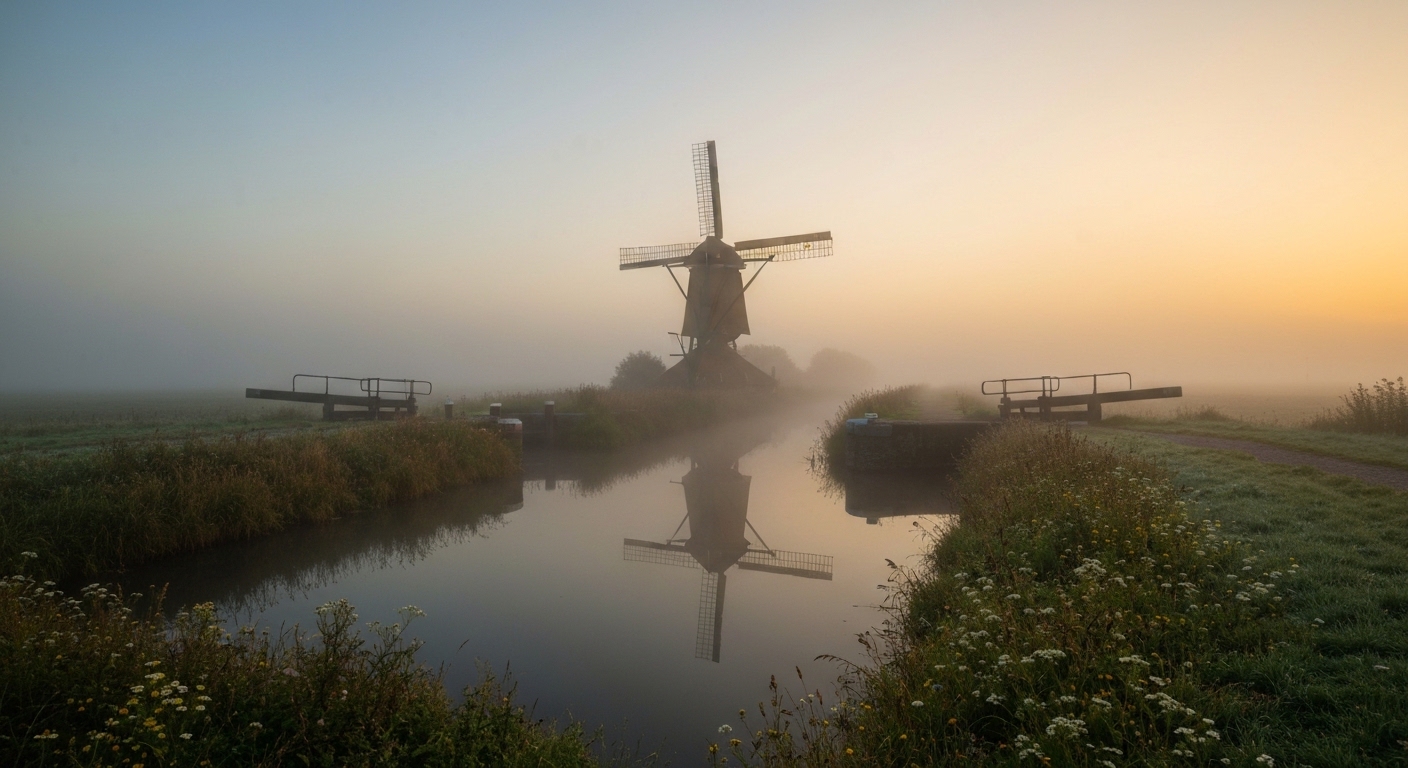
The Netherlands offers far more than Amsterdam's canals. Top things to do include exploring Giethoorn's car-free waterways, cycling Groningen's countryside routes, visiting UNESCO-listed Kinderdijk windmills, wandering medieval Maastricht, and discovering the coastal village of Volendam. With approximately 17,000 km of cycling paths and 25% of the country below sea level, the real Dutch experience is gloriously weird and entirely off the tourist trail. (things to do in Netherlands explained below.)
Everyone goes to Amsterdam. You should go somewhere else first.
The Netherlands gets roughly 19–20 million tourists a year. Most of them spend three days in Amsterdam, take a photo near a canal, and go home thinking they've seen the country. They haven't. The real Netherlands — the one locals actually live in — is a network of cycling paths, windmill-studded polders, medieval market squares, and towns so quiet you can hear the cheese aging. (That's not a metaphor. Gouda is a place.) This Netherlands travel guide is your excuse to skip the obvious and find the version worth the flight.
Why 25% Below Sea Level Changes Everything
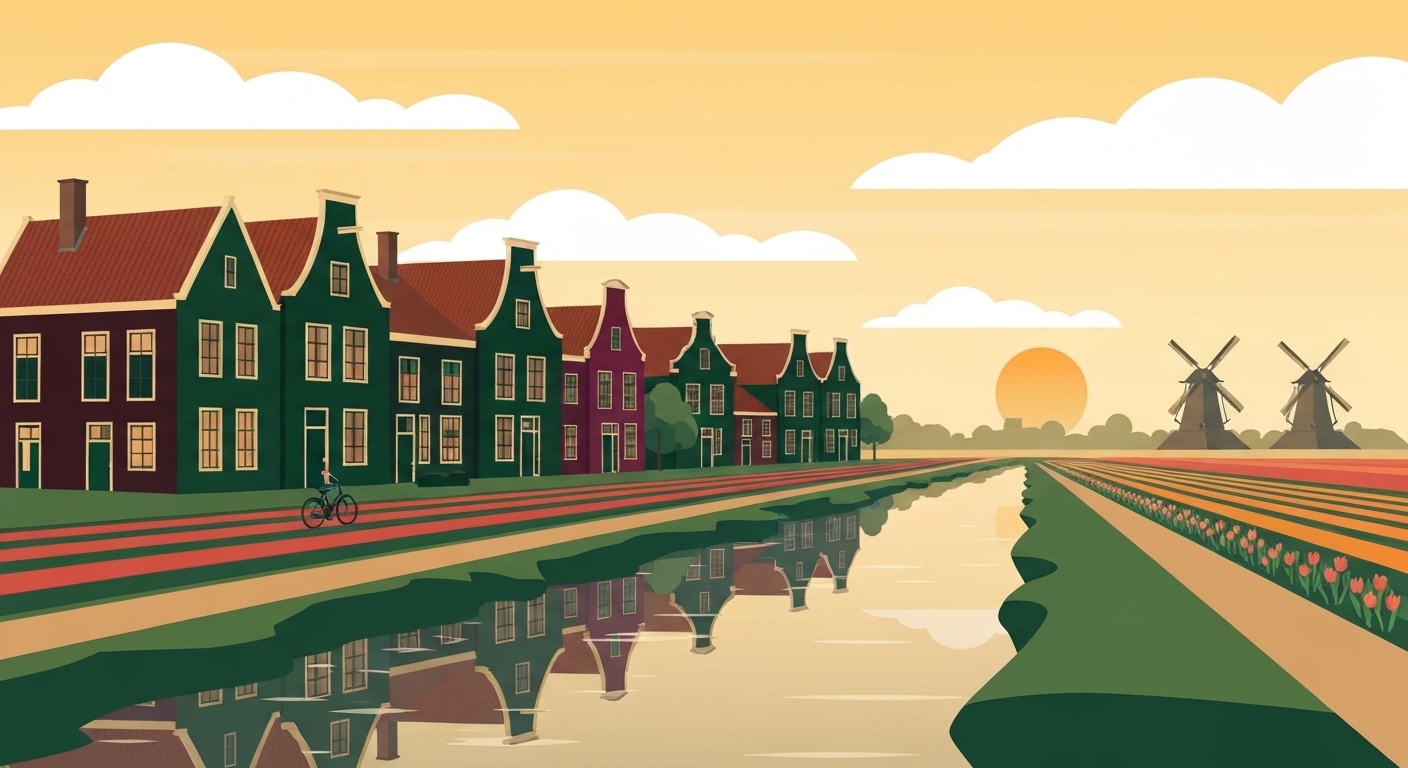
Approximately 25% of the Netherlands sits below sea level. That single fact shapes almost everything about the country — the landscape, the architecture, the engineering, and the psychology of the people who live there.
The Dutch didn't find flat land. They made it. Centuries of draining, diking, and sheer stubbornness created a country out of what was essentially a very optimistic puddle. The result is a landscape unlike anywhere else in Europe: vast open polders, long straight canals, and skies so enormous that 17th-century painters couldn't stop painting them.
Understanding this geography is the difference between being a tourist and actually getting the Netherlands. When you cycle across a polder in Groningen or stand at the Afsluitdijk watching the North Sea on one side and a lake on the other, you're not just sightseeing. You're watching an ongoing argument between a nation and the ocean — one the Dutch are currently winning.
For your Netherlands vacation itinerary, the geography also means one practical thing: it's almost entirely flat. Which brings us to the bikes.
Giethoorn: The Town With No Roads
Giethoorn has no roads. Not "very few roads" — no roads. The entire village runs on waterways. You arrive by boat, leave by boat, and get everywhere in between by boat or on foot along narrow paths between the canals.
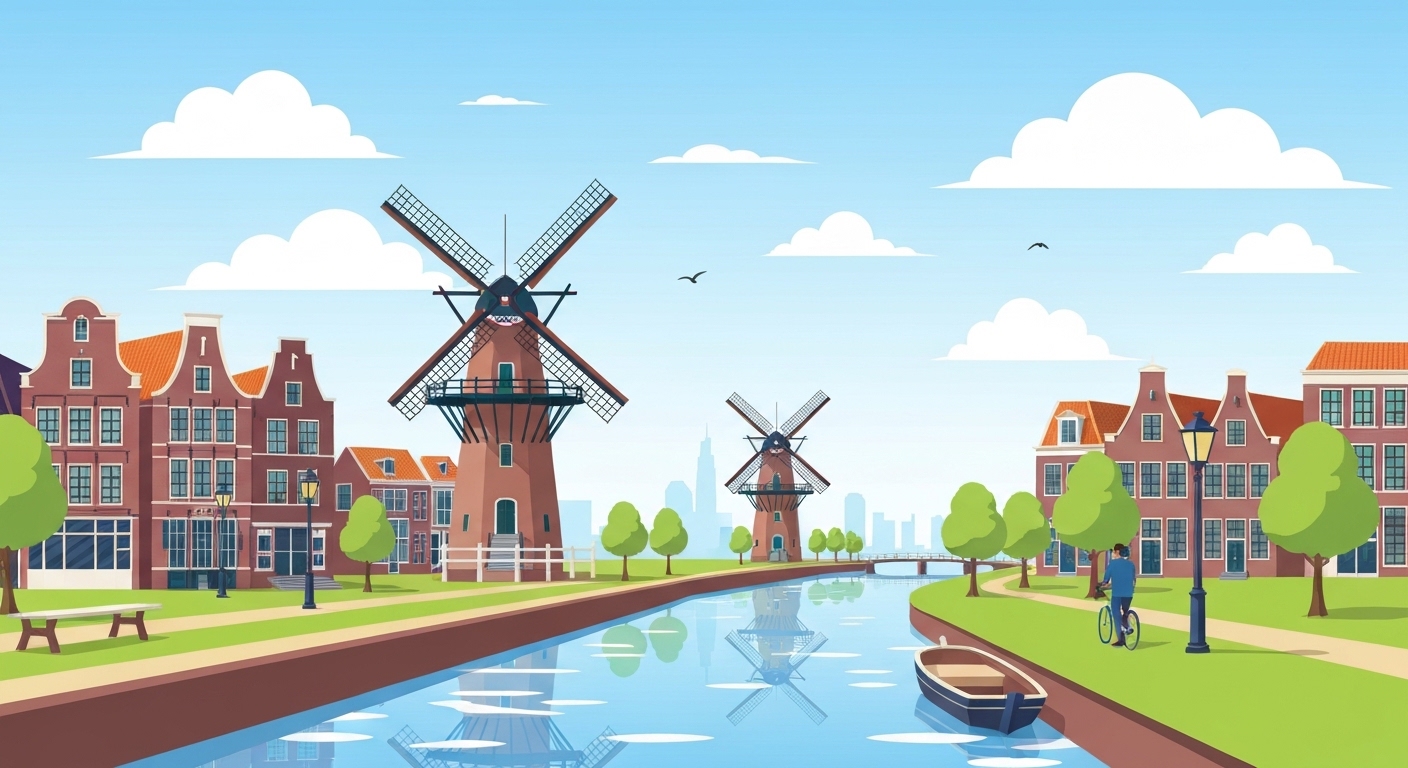
It's been called the "Venice of the North," though locals reckon that undersells it. Venice has tourists and traffic. Giethoorn has ducks and silence. The thatched-roof farmhouses sitting over dark water look like someone decided to build a screensaver and then actually live in it.
The practical tip: go on a weekday, or outside July and August. Weekend summer crowds bring motorboat queues and Instagrammers blocking the narrow bridges. Come on a Tuesday in May and you'll feel like you've wandered into a Dutch fairy tale. (The good kind. Not the ones with the dark endings.)
Hiring a small electric boat for an afternoon costs roughly €12–€18 per hour depending on the season. No licence required. Even if you've never driven a boat in your life, you'll manage — the canals are about as challenging as a bathtub.
Kinderdijk: Where Windmills Actually Mean Something
The windmills at Kinderdijk were designated a UNESCO World Heritage Site in 1995. There are 19 of them. They were built in the 18th century to pump water out of the Alblasserwaard polder, and a significant portion of them still operate.
This is not a theme park recreation of Dutch history. This is Dutch history, still standing, still functional, surrounded by working canals and reed beds. You can walk the dike paths between the mills, hire a bike to do the full circuit, or book a tour inside one of the working windmills to understand how an entire country stayed dry using nothing but wind and wooden gears.
It's about 15 km from Rotterdam, making it an obvious day trip from the city. Most visitors combine it with a stop in Dordrecht — a genuinely underrated medieval town that gets a fraction of the attention it deserves. That's a full afternoon well spent, and neither one will require fighting for a photo angle.
Maastricht: The City That Feels Suspiciously Un-Dutch
Maastricht sits in a narrow strip of land with Belgium to the west and Germany to the east. It has been occupied by the Spanish, the French, and the Austrians, and it carries every one of those influences proudly. The food is richer, the architecture is more baroque, and the wine list is considerably longer than anything you'll find in Amsterdam.
The old town — the Binnenstad — is a maze of Roman walls, medieval churches, and independent boutiques that feels more Burgundian than Dutch. The Selexyz Dominicanen bookshop, built inside a 13th-century Dominican church, regularly appears on lists of the world's most beautiful bookshops. The fact that it sells books inside a 700-year-old church with painted vaulted ceilings is either brilliant or deeply chaotic, depending on your relationship with libraries.
Come here for a weekend. Eat the vlaai (a local tart that local people take very seriously). Walk the old town walls. Cross the Sint Servaasbrug — the oldest bridge in the Netherlands — and sit on the Vrijthof square with a coffee. This is a best place to visit in Netherlands that most international tourists skip entirely, which is frankly their loss.
Groningen: Cycling Capital the Tourists Haven't Found Yet
According to reports, in 2023 several Dutch regional tourism boards began actively promoting smaller cities like Groningen to reduce overtourism pressure on Amsterdam. It's working — slowly. Groningen is still genuinely quiet by comparison.
It's a university city in the far north with a young population, excellent food markets, and a cycling culture so embedded that the ratio of bikes to people reportedly exceeds 1:1. The city centre is compact and largely car-free. The surrounding province has some of the best cycling routes in the country — flat, wide, and running through landscapes that look like a Vermeer that got too much fresh air.
The Groninger Museum, bright orange and built over a canal, is worth several hours. But the real draw is using Groningen as a base to cycle into the rural Groninger countryside — past medieval terpen mounds, isolated churches, and farms that haven't changed their aesthetic since approximately the 1700s.
17,000 km of Cycling Routes. Pick One. Any One.
The Netherlands reportedly has approximately 17,000 km of dedicated cycling routes. That's enough to cycle from Amsterdam to Sydney and have some left over. (Admittedly, most of that route would involve water. The Dutch would probably build a dike for it.)
The national LF-route network connects the entire country via numbered long-distance paths. The LF1 coastal route runs the entire Dutch coastline. The LF4 crosses the heart of the country through Gelderland's river valleys. You can rent a standard bike at almost any Dutch train station for around €10–€15 per day.
A rule of thumb: combine train and bike. Dutch trains accept bicycles, and most routes work brilliantly as one-way cycles with a train back. The NS railways website has full guidance on bike transport. This is how locals actually explore the country — and it costs almost nothing.
De Fietsersbond, the Dutch cycling advocacy group, reportedly launched initiatives in 2015 to promote routes beyond the typical tourist paths. Their route maps are the ones to use if you want to cycle somewhere genuinely local rather than somewhere Instagram has already ruined.
Volendam and the Coastal Villages Worth the Detour
Volendam sits on the Markermeer — the lake created when the Zuiderzee was partially enclosed by the Afsluitdijk in 1932. It still looks like a 19th-century fishing village because it essentially is one. The harbour is intact. The wooden houses are intact. The locals still occasionally wear traditional Dutch costume, though mostly for tourists. Fair enough — it's genuinely what they looked like.
Nearby Marken, accessible by a narrow causeway, goes further. It was an island until 1957, and the isolation shows. The houses are clustered on raised wooden platforms called werven, the streets are too narrow for cars, and the community has maintained its traditional architectural character with unusual consistency.
Neither village will take more than a half-day. Both are easy from Amsterdam by bus or a short ferry combination. Nine times out of ten, people who skip these for a fourth Amsterdam canal tour regret it.
The Afsluitdijk: A Road Across the Sea That Shouldn't Exist
Completed in 1932, the Afsluitdijk is a 32 km barrier dam connecting North Holland to Friesland across what used to be open sea. It turned the Zuiderzee into the IJsselmeer and Markermeer, created tens of thousands of hectares of new farmland, and gave the Dutch a road that runs straight across water for half an hour.
Most visitors drive or cycle it without fully registering what it is — which is essentially one of the greatest feats of civil engineering in human history. On the western side: the IJsselmeer, calm and brown. On the eastern side: the Wadden Sea, wild and tidal. Stand at the monument in the middle and look both ways. One direction is a lake that used to be a sea. The other direction is still the sea. The Dutch simply decided where each one stopped.
Cycling the Afsluitdijk is a serious flat-terrain cycling experience — 32 km of pure exposure to North Sea wind. Pack accordingly. "Packing accordingly" means considerably more layers than you think.
Strong Take: Stop Treating Amsterdam as the Whole Country
Here's an opinion, and I'll stand by it: building a Netherlands vacation itinerary around Amsterdam alone is a category error. It's like visiting France and only going to Paris, except the country is smaller and the trains are faster, so there's even less excuse.
Amsterdam is genuinely excellent. The Canal Ring — established during the Dutch Golden Age and reportedly formalised around 1612 — is one of the most beautiful urban environments in Europe. The Rijksmuseum is world-class by any honest measure. But Amsterdam receives the overwhelming majority of the country's 19–20 million annual visitors, and the strain shows. Accommodation prices in the city centre run 40–60% higher than equivalent quality in Utrecht, Maastricht, or Groningen. The popular museum queues can stretch to two hours in summer. The narrowest canal streets are genuinely crowded on weekends.
Meanwhile, Delft — 15 minutes from Amsterdam by fast train — has the same canal aesthetic, a fraction of the crowds, working Delftware potteries, and a market square where you can sit with a coffee and watch actual Dutch people live their actual lives rather than watching other tourists watch the canal. Utrecht has a cathedral tower, a canal system with unique lower-level terraces unlike anywhere in the country, and a music and food scene that consistently outranks Amsterdam in quality-per-euro.
The actionable consequence here is simple: use Amsterdam as your arrival city if you must, spend one or two nights, and then get on a train. The Netherlands tourist attractions that genuinely reward a visit are distributed across the whole country. The Dutch infrastructure — trains every 15–30 minutes between major cities, 17,000 km of bike paths, bikes rentable at every station — is specifically designed to make this easy. There is no logistical excuse for treating this as an Amsterdam trip with optional day trips. Flip the ratio.
What is the Netherlands famous for?
The Netherlands is famous for tulip fields, windmills, canals, cycling culture, and Rembrandt. The country also has UNESCO-listed sites including the Kinderdijk windmill network, a coastline shaped by extraordinary water engineering, and a global reputation for cheese production — Gouda and Edam are both actual Dutch towns, not just cheese brand names.
Is the Netherlands the same as Holland?
No. Holland refers specifically to North Holland and South Holland — two provinces that include Amsterdam and Rotterdam. The Netherlands is the whole country, comprising 12 provinces. Calling all of the Netherlands "Holland" is a bit like calling all of the UK "London." Technically understandable, technically wrong, and the other provinces will absolutely notice.
How do you get around the Netherlands without a car?
Easily — arguably better than with a car. Dutch trains connect major cities every 15–30 minutes. Bikes are rentable at almost every train station for around €10–€15 per day. The national cycling route network covers approximately 17,000 km. A combination of train and bike covers virtually the entire country efficiently. Most locals don't use cars for domestic travel at all.
Is the Netherlands or Belgium better to visit?
Different strengths, fair call to compare them. Belgium wins on food, beer, and medieval city centres — Bruges and Ghent are extraordinary. The Netherlands wins on cycling infrastructure, coastal landscapes, and the sheer variety of experiences packed into a small area. Maastricht, sitting right on the Belgian border, actually blends both sensibilities. Honestly, visit both — they're small countries and the train between them takes under two hours.
How much does a trip to the Netherlands cost?
Budget roughly €80–€120 per day for accommodation, food, and transport if you stay outside Amsterdam. Inside Amsterdam, push that to €130–€180. Train travel is efficient and not expensive — Amsterdam to Rotterdam runs around €15–€18 one-way. Museum entry typically runs €15–€25 per attraction. Cycling costs almost nothing once you've rented a bike. The Netherlands rewards slower, more local travel with significantly lower costs.
What is the best time to visit the Netherlands for beginners?
April to June is the sweet spot. Tulip fields peak in April and May — the Keukenhof gardens reportedly receive over a million visitors in this window for good reason. June adds longer days and reliable-ish weather before summer crowds arrive. September is also excellent: warm, quieter, and the light in the northern provinces is genuinely extraordinary. July and August work but bring peak prices and peak queues.
What are the best off-the-beaten-path destinations in the Netherlands?
Giethoorn for car-free waterway villages. Groningen for cycling culture without the crowds. Middelburg in Zeeland for a medieval town almost no international tourists visit. Texel island for coastal dunes and a ferry crossing that feels like leaving Europe slightly. Dordrecht for medieval port city history within cycling distance of Kinderdijk. Any of these beats a fourth afternoon in Amsterdam.
Is the Netherlands really worth visiting or overrated?
Worth visiting — but Amsterdam specifically can feel overrated when crowded. The Netherlands as a whole is genuinely underrated, particularly outside the capital. The engineering landscape (polders, dikes, the Afsluitdijk), the cycling infrastructure, the variety of cities from Maastricht to Groningen, and the quality of regional food and architecture all reward anyone who bothers to look beyond the obvious. The Dutch have built something remarkable. Most tourists only see the postcard version.
Go ahead. Build the itinerary nobody's told you about yet.
The Netherlands is small, flat, well-connected, and full of places that tourists systematically ignore because Amsterdam is right there and Amsterdam is famously excellent. That's their loss and your opportunity. Giethoorn won't have a queue. Groningen won't have a two-hour museum wait. The Afsluitdijk will have nothing but wind and North Sea and the quiet satisfaction of cycling across something that should not exist. Rent a bike, get on a train, and go find the Netherlands the locals actually live in. It turns out it was here the whole time — approximately 25% of it below sea level, all of it worth the detour.