
Key Takeaways
- Congress adopted the Declaration of Independence on July 4, 1776, but delegates signed it over weeks and months afterward
- 56 delegates signed the Declaration, though not all on the same day
- Independence Day celebrates the adoption date, not the signing date
- Extreme heat and weather conditions impacted Fourth of July celebrations in 2024
- America's 250th anniversary will be celebrated in 2026
Independence Day is the annual American celebration on July 4th commemorating the Declaration of Independence. Observed since 1776, this federal holiday marks when the Continental Congress formally adopted the Declaration of Independence, establishing the foundation for democratic governance and American independence from British rule.
Here's an uncomfortable truth to bring to your next barbecue: the Declaration of Independence probably wasn't signed on July 4th. According to historical records, many of the 56 delegates signed the document over a period of weeks and months following its adoption. The date celebrated is actually when Congress *adopted* the document, not when all delegates signed it. This distinction has been part of Independence Day observance since 1776.
Recent Fourth of July celebrations have also faced weather-related challenges, with reports indicating that extreme heat affected holiday events in various locations in 2024. Event organizers across the country have had to adapt celebrations in response to climate conditions.
The real history behind July 4th (it's messier than your textbook)
The story didn't start on July 4th. It started with muskets. According to historical accounts, the American Revolutionary War began in April 1775 with the Battles of Lexington and Concord — events that marked the beginning of armed conflict between colonists and British forces.
Independence itself moved slower than a committee meeting, because it was one. On June 7, 1776, Richard Henry Lee introduced a resolution to the Continental Congress proposing independence from British rule.
Congress calling for the colonies to formally separate from Britain. Congress didn't just say yes on the spot. According to reports, Thomas Jefferson spent from June 11 to June 28 drafting the Declaration of Independence with input from the drafting committee, a process that reportedly took approximately 17 to 18 days — which, if you've ever tried to get five people to agree on a group chat name, sounds about right.Congress actually voted to adopt Lee's resolution on July 2, 1776. John Adams reportedly believed *that* was the date Americans would celebrate forever. He was off by two days, which is either a rounding error or the greatest scheduling mixup in American history.
July 4th is when the Declaration itself was formally adopted. It wasn't read publicly until July 8, 1776, in Philadelphia's Independence Square — meaning most colonists found out about their new country a good four days after the fact, which is basically 18th-century buffering.
The fighting dragged on for years after the paperwork was settled. The Revolutionary War lasted approximately 8-9 years altogether, with the Battle of Yorktown in October 1781 effectively ending major combat. Independence wasn't made official-official until the Treaty of Paris was signed on September 3, 1783. So next time someone says "1776," feel free to remind them the war technically ran for the better part of a decade afterward.
Who actually signed the Declaration, and when
Approximately 56 delegates signed the Declaration of Independence, representing roughly 13 original colonies. Here's the part that ruins dinner parties: most historians agree the bulk of signatures were added over the following weeks and months, not on July 4th itself. John Hancock's famously oversized signature is the one everyone remembers, presumably because the man had zero interest in squinting to read fine print.
So was the Declaration of Independence actually signed on July 4, 1776? Short answer: no, not really. Long answer: it was adopted that day, but the physical signing ceremony most people picture — with all 56 names going down at once — is largely myth. Fair enough if that changes how you look at every painting of the event you've ever seen.
Why 2024's Fourth of July got cancelled in Washington DC
2024's Independence Day celebrations ran headfirst into extreme heat that forced major cancellations, including parade disruptions in Washington DC. Event organizers who'd normally spend the holiday worrying about traffic and lost sparklers were instead staring at heat advisories and rescheduling entire programs.
This wasn't a minor scheduling hiccup. When a national capital reworks its flagship patriotic parade because of temperature, it signals something bigger than one bad weather day — it's a preview of how climate conditions are starting to reshape a 248-year-old tradition.
How extreme heat is changing outdoor patriotic events
Extreme heat did more than cancel one parade. It pushed organizers nationwide to shift start times earlier, add shaded viewing areas, and in some cases delay evening fireworks displays to avoid peak-heat hours during daytime events. Outdoor concerts, historical reenactments, and family picnics all got the same memo: adapt or melt.
Nine times out of ten, a hot Fourth of July just means sunscreen and extra lemonade. But when temperatures cross into genuinely dangerous territory, cancelling becomes a safety call, not an inconvenience. Reckon that's the trade-off going forward — bigger celebrations for the 250th anniversary in 2026, but with a much closer eye on the thermometer.
Political speeches and the Trump factor
Independence Day has always doubled as a stage for political speeches, and recent years are no exception. Public figures, including Trump, have used July 4th platforms to deliver remarks tied to patriotism, national identity, and the countdown to America's 250th anniversary. It's part of a long tradition — Independence Day has never just been about fireworks, it's been a recurring stage for politicians to make their case to the country, for better or worse.
That's not new. Presidents from both parties have used the holiday for decades to deliver messages about national unity, historical legacy, and where the country's headed next. What's different in 2024 is the backdrop: extreme weather disruptions and an approaching milestone anniversary giving every speech a little extra weight.
America's 250th anniversary is coming fast
Mark your calendar: 2026 marks America's 250th anniversary of independence — the semiquincentennial, if you want to sound smart at a barbecue and mildly insufferable at the same time. Planning for events is already ramping up, and 2024's celebrations were widely treated as a warm-up lap for what organizers expect to be the biggest Independence Day commemoration in generations.
That makes this year's heat-related disruptions more than a one-off headache. If extreme weather is already forcing changes two years out, event planners for the 250th are almost certainly building contingency plans into the official schedule now, not scrambling for them later.
July 4th traditions and where they came from
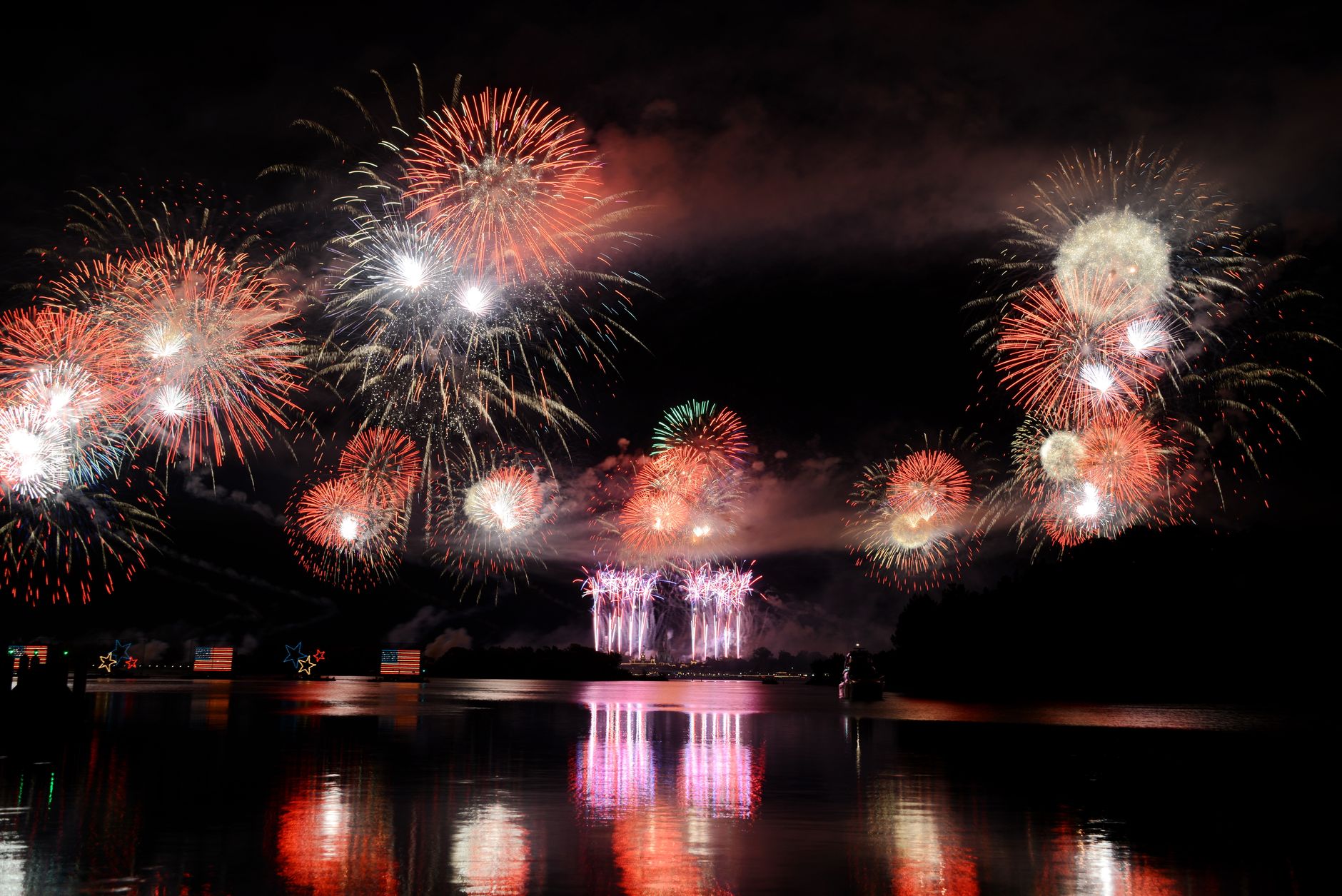
Fireworks weren't a later add-on — they go back to the very beginning. Colonists reportedly celebrated the first anniversary of independence in 1777 with fireworks, bonfires, and cannon fire, which means Americans have been blowing things up in celebration of freedom for nearly two and a half centuries straight. Consistency, if nothing else.
Independence Day wasn't officially made a federal holiday until decades later, and it took even longer to become a paid holiday for federal workers. The parades, backyard barbecues, and flag displays most of us think of as "always been that way" actually evolved gradually over the 1800s and 1900s, layering new customs onto the same core idea: a public, noisy, food-heavy tribute to a Declaration most people have never actually read start to finish.
One quick history nerd note: Independence Day is not the same as Constitution Day. Independence Day celebrates the 1776 Declaration; Constitution Day, observed September 17th, marks the 1787 signing of the U.S. Constitution. Different documents, different centuries, same tendency to get mixed up at trivia night.
Family celebration tips that don't involve heatstroke
Given 2024's heat disruptions, a few practical adjustments make Independence Day safer without sacrificing the fun. This is the part your history textbook definitely skipped.
- Move outdoor activities earlier or later in the day, avoiding peak heat between roughly noon and 4pm.
- Watch fireworks from indoor or shaded vantage points when possible instead of standing on open pavement for two hours.
- Hydrate deliberately — water over sugary drinks, especially for kids and older relatives who won't admit they're overheating.
- Have a backup indoor plan for the actual celebration, not just the fireworks, if local heat advisories are in effect.
- Check local event changes before you drive downtown — 2024 proved that parade schedules can shift with little notice.
None of this is complicated. It's mostly common sense wearing a red-white-and-blue hat. But common sense is exactly what gets forgotten when there's potato salad involved.
The economic impact of a cancelled Independence Day
Cancelled parades and delayed events don't just disappoint families with lawn chairs staked out since 6am. They ripple through local economies. Vendors who count on Fourth of July foot traffic — food trucks, souvenir stands, small breweries running holiday specials — lose a guaranteed high-revenue day when a flagship event gets pulled or shortened.
Cities that invest in parade infrastructure, security, and staffing months in advance don't get that money back just because the weather didn't cooperate. Add in tourism dollars from out-of-towners who plan trips around a specific city's Independence Day programming, and a single heat-driven cancellation can mean a real, measurable dent in local commerce — not just a mood killer.
Here's my hot take (pun very much intended)
Reckon the extreme heat cancellations in 2024 are the best thing that could've happened to Independence Day planning, and I don't say that lightly. For 248 years, the holiday has run on autopilot — same parade route, same start time, same assumption that July in America is just "warm." That assumption is now costing cities real money and putting people at genuine risk.
The fix isn't complicated: shift major daytime events to morning or evening slots, the way plenty of Southern festivals already do in peak summer. Cities that build heat contingencies into 250th anniversary planning now will save themselves a scramble in 2026, when attendance and stakes will both be dramatically higher. Cities that don't will be reading headlines about cancelled anniversary parades — and that's a much worse look than a rescheduled one.
What is Independence Day and why is it celebrated?
Independence Day celebrates the July 4, 1776 adoption of the Declaration of Independence, when the Continental Congress formally declared the 13 colonies free from British rule. Americans mark it with fireworks, parades, and barbecues — because nothing says "we're a free nation" quite like burgers and controlled explosions.
When did Independence Day become a national holiday?
Independence Day celebrations date back to 1777, just a year after the Declaration, with early observances including fireworks and bonfires. It later became an official federal holiday, though the paid-holiday status for federal employees came even further down the line.
How do Americans celebrate the Fourth of July?
Fireworks, parades, backyard barbecues, and flag displays are the classic combo. In 2024, extreme heat pushed many communities to adjust timing — earlier events, shaded viewing areas, and delayed evening fireworks — proving even a 248-year tradition can learn new tricks.
What is the difference between Independence Day and Constitution Day?
Independence Day, July 4th, celebrates the 1776 Declaration of Independence. Constitution Day, observed September 17th, marks the 1787 signing of the U.S. Constitution. Two different documents, eleven years apart — mixing them up is basically the historical version of confusing salt and sugar.
Who signed the Declaration of Independence?
Approximately 56 delegates from the 13 original colonies signed the Declaration of Independence. John Hancock's signature is the most famous, largely because he wrote it enormous — reportedly so King George could read it without his glasses.
Why is Independence Day celebrated on July 4th instead of July 2nd?
Congress actually voted to adopt independence on July 2, 1776 — the date John Adams believed would be remembered. But the Declaration itself was formally adopted on July 4th, and that's the date that stuck in public memory and celebration ever since.
Was the Declaration of Independence actually signed on July 4, 1776?
Not really, no. July 4th marks when the Declaration was adopted, but most historians agree the actual signatures from the 56 delegates were added over the following weeks and months. The single-day signing ceremony most people picture is largely myth.
How much does the average American spend on July 4th?
Spending typically covers food for barbecues, fireworks, travel, and event tickets, with costs varying widely by region and household size. 2024's heat-driven event cancellations also affected local spending patterns, as families redirected plans from outdoor public events toward home celebrations.
What's coming for America's 250th anniversary?
2026 marks the 250th anniversary of the Declaration of Independence, expected to bring the largest Independence Day commemorations in generations. Planning is already underway, with 2024's celebrations widely seen as an early test run for logistics, weather contingencies, and public turnout.
The bottom line
Independence Day has survived a Revolutionary War, 248 summers, and apparently now a battle against the thermostat. The history is messier than the fireworks make it look — no dramatic mass signing, no perfect date, just a committee, a heatwave of arguments, and a document that changed everything anyway. Reckon that's a fitting metaphor for the country it created. Stay cool out there this July, both patriotically and literally.