
Key Takeaways
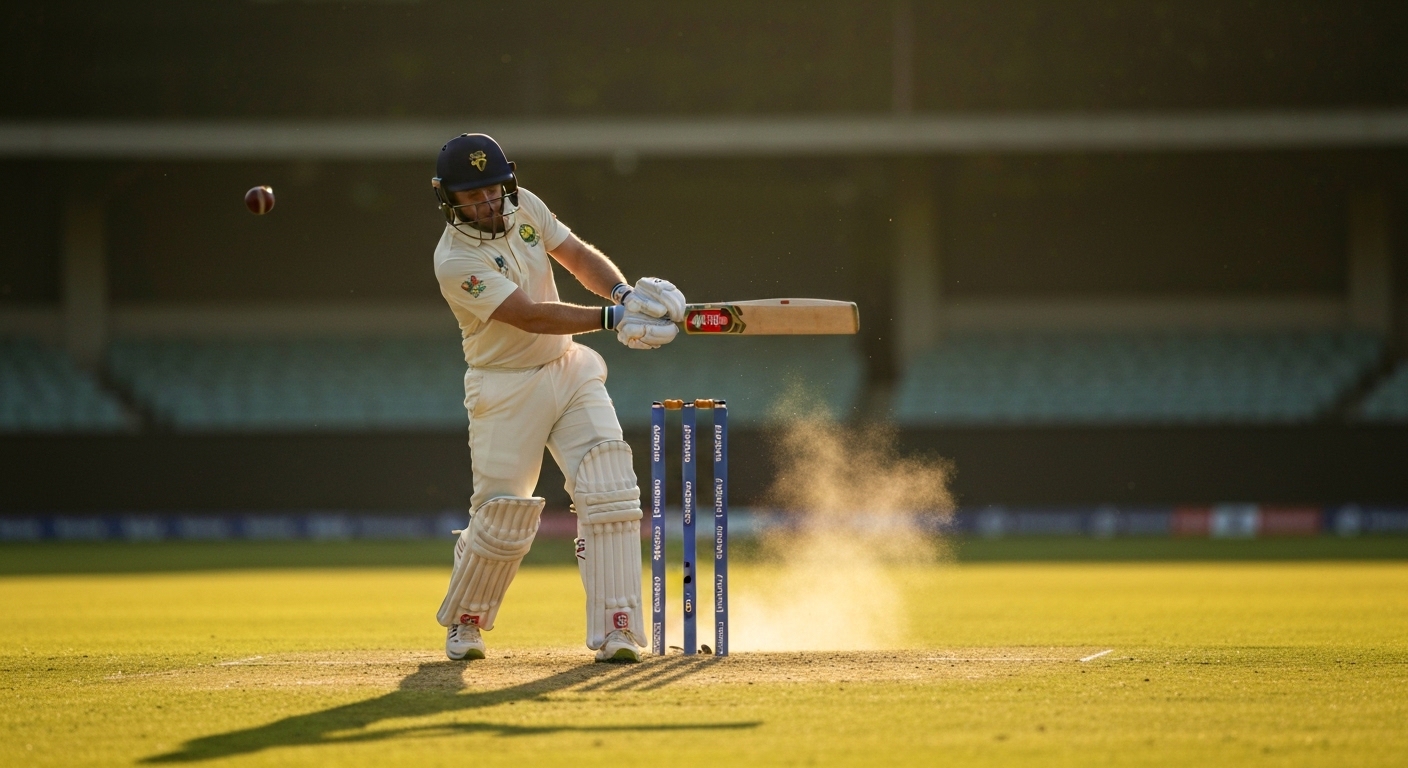
- Ben Stokes became England Test captain in 2022 and revolutionized the sport with "Bazball" — an aggressive, entertainment-first philosophy
- "Bazball" was co-created with coach Brendon McCullum and prioritizes attacking cricket over traditional defensive play
- This shift has transformed England from a struggling side into one of the most exciting teams in international cricket
- The approach challenges 150+ years of Test cricket convention and has sparked widespread debate about the sport's future
- Stokes' mental health break and partnership with McCullum were pivotal in developing this game-changing strategy
Ben Stokes is England's Test cricket captain and one of the finest all-rounders of his generation. Since his 2022 appointment, he has spearheaded "Bazball" — an aggressive, attacking batting philosophy developed with coach Brendon McCullum that has redefined how Test cricket is played at international level.
There's a certain type of cricketer who plays the game as it's always been played — careful, measured, respectful of history. Ben Stokes is not that cricketer. Since taking the England Test captaincy in 2022, Stokes and coach Brendon McCullum have essentially walked into 150 years of Test cricket tradition, looked it dead in the eye, and said "yeah, nah." The result is the most talked-about shift in Ben Stokes cricket career — and arguably in the sport itself.
Who Is Ben Stokes, Exactly?
Ben Stokes is an English cricketer born in Christchurch, New Zealand, on June 4, 1991. He plays as a right-handed batsman and right-arm fast-medium bowler — the kind of all-rounder England has been quietly desperate for since Andrew Flintoff's knees gave up the ghost.

He made his Test debut for England against Australia in 2013. That's the start of a Ben Stokes biography that reads less like a cricket career and more like a Netflix drama — complete with a World Cup miracle, a very public mental health battle, a pub incident that almost ended everything, and an eventual return as captain that nobody quite expected.
As a cricketer, Stokes does things other people simply can't. He bats with controlled aggression. He bowls with genuine pace and movement. And he fields like he's personally offended by the ball going anywhere near the boundary. The complete package, in other words — which is a phrase I'd normally ban myself from using, but in this case it's just accurate.
He was appointed England Test captain in 2022 under new ECB-appointed coach Brendon McCullum, with cricket director Rob Key overseeing the broader strategy. Together, they didn't just rebuild England's Test team. They rebuilt how the team thinks about cricket.
The Stats Don't Lie — And They're Pretty Wild
Let's talk numbers, because Ben Stokes stats are legitimately impressive even before you factor in the captaincy era.
Across his Test career, Stokes has reportedly accumulated more than 8,000 Test runs. His batting average sits in the mid-to-high 30s — respectable for a top-order batsman, remarkable for someone batting in the lower-middle order for much of his career. But the number that really tells the story is his strike rate, which reportedly sits significantly above typical Test batting norms. In a format where some batsmen treat a run-a-ball as reckless, Stokes has consistently scored at a pace that makes bowlers uncomfortable.
On the bowling side, he has reportedly taken more than 150 Test wickets. Combined with his batting, that makes him one of a tiny group of players who can genuinely influence a Test match in three different disciplines.
He's also captained England in more than 30 Test matches, with a win rate that has made rivals genuinely nervous. (According to reports, England's turnaround under Stokes and McCullum has been one of the sharpest in modern Test cricket history — though the exact figures shift depending on which series you're counting.)
Bazball Explained: What It Actually Means
"Bazball" is the nickname — coined by the media, adopted with a shrug — for the aggressive batting philosophy England has played under Stokes and McCullum since 2022. "Baz" is McCullum's nickname. The ball bit is self-explanatory.
The core idea is this: England will bat aggressively, set big targets, and back their bowlers to take 20 wickets. They won't block for draws. They won't play for survival. They will, in the immortal words of absolutely no cricketing official ever, just have a crack.
In practice, this means chasing down fourth-innings targets that traditional cricket wisdom says are impossible. It means batting orders where everyone — from number one to number eleven — is expected to contribute with the bat. It means fast scoring rates, high risk, and high entertainment.
Critics called it reckless. They pointed out it would fall apart against quality opposition. They were occasionally right. But England's overall win record under this approach has been striking enough that the critics are doing a lot less talking than they were in 2022.
The broader cricket world has noticed. Teams from Australia to India have quietly started examining their own approaches in response. When one team plays a fundamentally different game and keeps winning, you pay attention. (Much like when Jerry Seinfeld notices something weird about airline food — once it's pointed out, you can't stop thinking about it.)
That 2019 World Cup Final — Still Not Over It
Before the captaincy, before Bazball, there was Lord's on July 14, 2019. England vs New Zealand in the Cricket World Cup final. A match so improbable that the rulebook itself had to be invoked to decide the winner.
Stokes played what is widely regarded as one of the greatest innings in limited-overs cricket history. England needed 242 to win. They were wobbling. Stokes came in and anchored the chase, finishing unbeaten on 84 from 98 balls. The match ended in a tie. The Super Over ended in a tie. England won on boundary count.
It was the kind of finish that only happens in cricket — a sport that invented the concept of ending a match with "well, both teams were pretty good, weren't they." And Stokes was at the centre of all of it. That innings didn't just win England the World Cup. It established him as the kind of cricketer who gets bigger when the moment gets bigger.
The Mental Health Break That Changed Everything
In 2021, Stokes did something most elite sportspeople at the peak of their career don't do. He stepped away.
He took a mental health break from all cricket — indefinite, public, and at a time when England needed him. He spoke openly about his struggles. The cricket world largely responded with respect, though there were the inevitable mutters from the "just get on with it" brigade who still think stoicism is a personality.
That break matters to the Stokes story for one underrated reason: he came back different. More settled. More certain about who he was and what he wanted from cricket. When he returned and eventually took the captaincy, there was a clarity to his decision-making that felt like it came from someone who had genuinely worked something out.
The mental health break wasn't a detour in his career. It was arguably the making of the captain he became.
The Stokes-McCullum Partnership Nobody Saw Coming
Brendon McCullum was appointed England Test coach in 2022 — a slightly eyebrow-raising choice given he's a New Zealander who played against England many times. Rob Key, as ECB cricket director, backed the appointment.
McCullum had captained New Zealand with the same aggressive, positive philosophy that now defines England's Test approach. He and Stokes connected almost immediately on how cricket should be played. The result was a partnership that felt less like captain-and-coach and more like two people who'd independently arrived at the same heretical idea: Test cricket doesn't have to be boring.
Joe Root, England's most reliable senior batsman, adapted his game under this philosophy and reportedly played some of the best cricket of his career. The whole ecosystem shifted when the leadership changed.
Will Bazball Actually Last?
Here's the honest answer: probably not in its purest form. Every philosophy has its limits. England has had series losses under Bazball — opponents learn, conditions matter, and some pitches just won't cooperate with your desire to score at five runs an over.
But the deeper shift might stick. The idea that Test cricket can be played with intent, that entertainment and results aren't mutually exclusive, that a draw isn't always the smart outcome — those ideas are now loose in the world. You can't un-ring that bell.
Other teams have already started adjusting their approach in response to England's success. Bazball as a brand may fade. The philosophy underneath it has already changed the conversation.
Hot Take: Bazball Is the Best Thing to Happen to Test Cricket in 20 Years
Here's my strong opinion, backed by something concrete: Test cricket was in a viewership crisis before Bazball arrived.
The format was struggling to compete with the explosive growth of T20 cricket globally. Board meetings across the cricket world were full of anxious conversations about relevance. Long five-day matches where the result was a draw felt increasingly hard to sell to younger audiences who had grown up watching Twenty20 hit-fests.
Then England started chasing 300+ in the fourth innings and winning. Suddenly, Test cricket had a narrative again. It had something to argue about over dinner. It had highlights worth watching on a phone screen. Attendance at England home Tests reportedly improved. The conversation around the format picked up energy it hadn't had in years.
Here's the number that matters: England reportedly won an extraordinary proportion of their Test matches in the first two years under Stokes and McCullum — by some accounts, a win rate that put them among the best in that period globally. That's not just a vibe. That's a result.
My take: don't use Bazball if you have a mediocre bowling attack and no real all-rounders. The approach requires very specific personnel. Copy the philosophy without the players and you'll get thrashed. But if you have the tools — and England currently does — it's the most effective Test cricket philosophy of the modern era.
The actionable consequence for cricket administrators is simple: stop treating entertainment and results as competing goals. Stokes has shown they're not.
Who is Ben Stokes?
Ben Stokes is England's Test cricket captain and an all-rounder born in Christchurch, New Zealand, on June 4, 1991. He bats right-handed and bowls right-arm fast-medium. Since his 2022 appointment as captain, he has co-created the "Bazball" philosophy with coach Brendon McCullum, transforming England into one of the most aggressive Test sides in the world. He's also the kind of bloke who makes the opposition nervous just by walking onto the field. No pressure.
What teams has Ben Stokes played for?
Ben Stokes has played Test, ODI, and T20 cricket for England at international level. At domestic level, he has represented Durham in county cricket and has played in franchise T20 competitions internationally. His primary identity, especially since the captaincy, is as an England Test cricketer — the format he has most dramatically shaped.
How did Ben Stokes win the 2019 World Cup for England?
Stokes played a match-winning innings in the 2019 Cricket World Cup final at Lord's against New Zealand, finishing unbeaten on 84. The match ended tied. The Super Over also ended tied. England won on boundary count — the most cricket way to end a match imaginable. Stokes was central to the chase and was named player of the match. If the rulebook is ever involved in your win, you know it was memorable.
Is Ben Stokes better than Andrew Flintoff as an all-rounder?
This is the argument England cricket fans will have at every pub forever, which is probably healthy. Flintoff was a generational figure — brilliant with bat and ball, iconic presence. Stokes has reportedly surpassed 8,000 Test runs and 150+ Test wickets, making his statistical case formidable. Add the captaincy transformation and the World Cup final innings, and most modern analysts rate Stokes as the superior all-rounder. Freddie would probably agree. He seems like a decent bloke.
How much is Ben Stokes worth and what is his salary?
Exact figures on Ben Stokes' net worth and salary aren't publicly confirmed, so treat any specific number you see online with healthy scepticism. As England captain and one of the sport's most marketable figures, his income combines his ECB central contract, county cricket earnings, franchise T20 contracts, and commercial endorsements. The man is not eating beans on toast, let's put it that way.
What position does Ben Stokes play in cricket?
Stokes is a genuine all-rounder — he bats in the middle order (typically around number five or six for England) and bowls right-arm fast-medium. He also fields at a very high level, usually in premium catching positions. The combination of all three disciplines at elite level is what makes him so valuable, and so annoying if you're playing against him.
What is Bazball and how does Ben Stokes use it as captain?
Bazball is the nickname for the aggressive batting philosophy England has adopted under Stokes and coach Brendon McCullum since 2022. Named after McCullum's nickname "Baz," it prioritises attacking stroke-play, high scoring rates, and chasing down large fourth-innings targets that traditional cricket would consider suicidal. As captain, Stokes sets attacking fields, encourages positive batting from all positions, and refuses to play for draws. It's basically the cricketing equivalent of playing FIFA on the hardest difficulty — with the volume turned up.
Is Ben Stokes still the best all-rounder despite his injuries?
Stokes has dealt with significant injuries across his career, including a finger injury that required surgery and periods away from bowling. Even when not bowling at full capacity, he remains an elite Test batsman and captain. When fit and fully functional, he's widely regarded as the best all-rounder currently playing Test cricket. Injury management is genuinely the biggest variable in how long he can sustain that status — it's less a talent question and more a physics one.
The Bottom Line
Ben Stokes didn't just become England Test captain in 2022. He became the most visible argument that Test cricket still matters. Through a combination of personal courage — including that very public mental health break — a match-winning World Cup innings, and a coaching partnership with Brendon McCullum that gave the whole project a name, Stokes has reshaped how the sport thinks about itself.
Bazball will evolve. The personnel will change. The win rate will fluctuate. But the fundamental idea — that Test cricket can be played with intent, aggression, and a genuine desire to entertain — is now part of the conversation permanently. Ben Stokes put it there.
And somewhere in New Zealand, a kid who grew up loving cricket is watching England bat on the fourth day of a Test match, chasing 350, and thinking: I didn't know you were allowed to do that. That's the legacy. Not the trophy. Not the stats. The permission.
Now if you'll excuse me, I need to go rewatch that 2019 final for the fourteenth time. It still doesn't seem real. (It was real. England won on boundaries. Cricket invented that rule and immediately needed it.)