7 things about Robert Eggers movies nobody told you
Robert Eggers made 5 films in a decade. One nearly bankrupted him. Here's what film critics won't tell you about his empire
GenzHunt Staff·June 29, 2026·15 min read·👁 46 views
Key Takeaways
Robert Eggers has directed only five feature films but built a reputation typically earned over 30+ year careers
His films range from modest budgets to $90 million, with production scales varying dramatically across projects
The Northman represented his biggest financial gamble and didn't fully pay off at the box office
Eggers uses unconventional aspect ratios and obsessive historical research as signature stylistic elements
His fifth film, Werwulf, features medieval werewolf mythology with Middle English dialogue
Robert Eggers is an American filmmaker known for atmospheric horror films including The Witch (2015), The Lighthouse (2019), The Northman (2022), Nosferatu (2024), and the upcoming Werwulf. His work is characterised by meticulous historical detail, folklore obsession, and extreme aspect ratio choices. He is widely regarded as a defining voice in contemporary arthouse horror. (Robert Eggers movies explained below.)
Robert Eggers has directed five feature films. That's it. Five. And somehow the man has built a reputation that most directors spend thirty years earning. His Robert Eggers movies get dissected in film schools, argued about on Reddit, and analyzed in cinematography discussions. Yet most coverage circles the same talking points — creepy atmosphere, historical accuracy, Willem Dafoe's performances — and misses the genuinely strange financial and creative architecture underneath. Here are seven things about the Robert Eggers filmography that almost nobody mentions.
TL;DR: Robert Eggers has made five films with escalating budgets across varying production scales, each shot in unconventional formats with obsessive historical research. His fifth film, Werwulf, reportedly features medieval werewolf mythology with Middle English dialogue.
---
1. The Witch Had a Modest Budget and Delivered Strong Box Office Returns
The Witch premiered at Sundance in 2015 with a production budget of approximately $4 million and reportedly grossed around $40 million worldwide. That return on investment is extraordinary by any standard, let alone for a film where the main character is a goat named Black Phillip.
What most reviews skip: that financial performance is what gave Eggers the creative leverage for everything that followed. Hollywood doesn't hand you a larger budget because your movie was atmospheric. They hand it to you because your last movie made money. The Witch was his calling card, his proof of concept, and — let's be honest — probably the reason he got to make a black-and-white film next instead of a Marvel two-picture deal.
The folkloric horror at the heart of The Witch also established what would become Eggers' signature thematic fingerprint: isolation, religious dread, a la
that actively hates the people in it, and dialogue that sounds like it was pulled from a 17th-century court document. Because it was.
---
2. The Lighthouse Used an Aspect Ratio Almost Nobody Uses
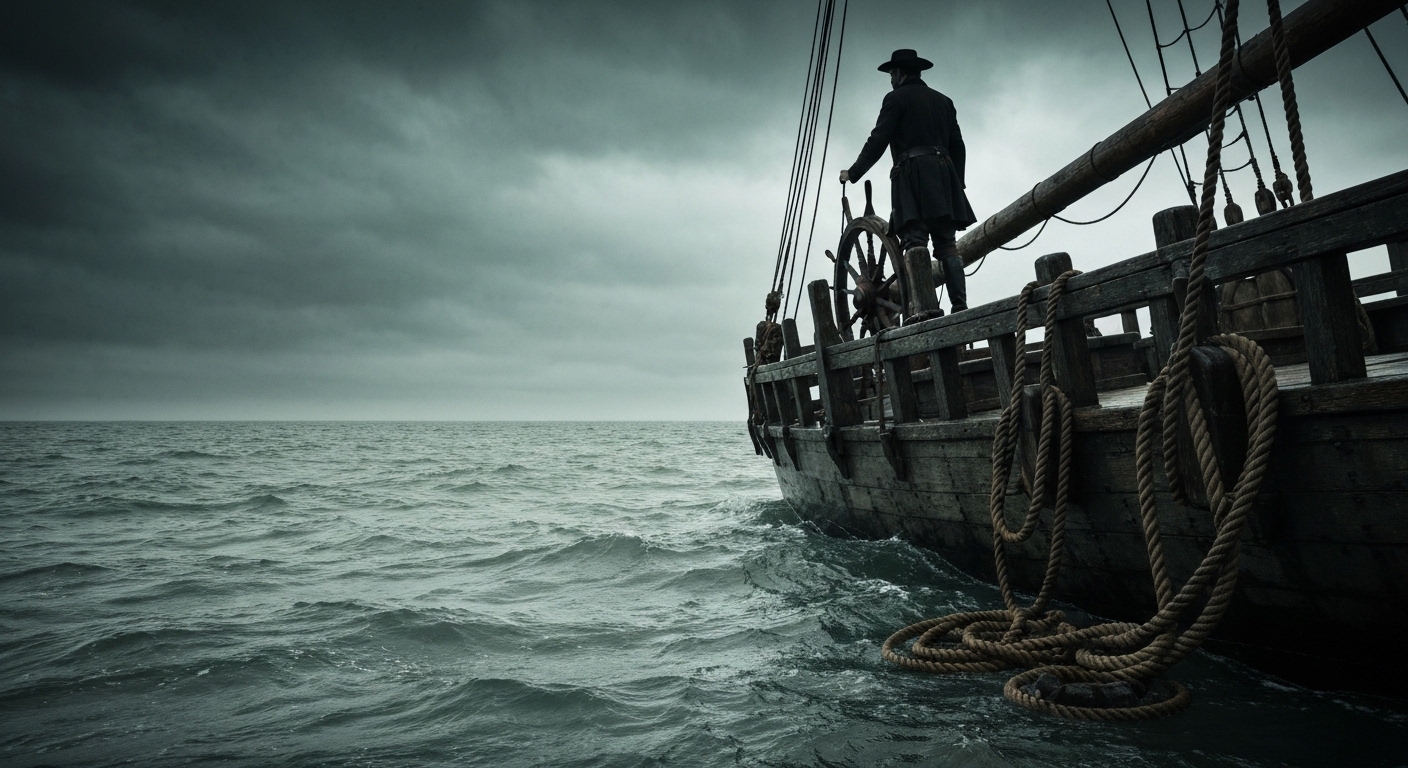
Shot in a 1.19:1 aspect ratio — an almost perfectly square frame — The Lighthouse (2019) is one of the most visually claustrophobic films ever released in mainstream cinemas. That format is not an accident and it's not aesthetic vanity. It mirrors the physical experience of being trapped on a small island with a man who will not stop farting. (The film, to its credit, addresses this directly.)
The black-and-white photography by Jarin Blaschke, who has become Eggers' key creative collaborator, was shot on orthochromatic-style stock to mimic 1890s maritime photography. This is the kind of decision that costs money, confuses studio executives, and results in a film that still looks genuinely unlike anything else made in the same decade.
The Lighthouse featured Willem Dafoe and Robert Pattinson, both doing career-best work in a story that is equal parts psychological horror, mythology, and two men arguing about whether one of them deserves to look at a lighthouse light. (Rule of thumb: if you find yourself screaming "HEPHAESTUS" while watching a film, Eggers directed it.)
---
3. The Northman Was His Biggest Gamble — and It Didn't Quite Pay Off
Here is an opinion you will not often read: The Northman was a near-miss disguised as a critical success.
The film carried an approximately $90 million production budget. It returned approximately $70 million in global box office. That's a $20 million shortfall before marketing is factored in — which in studio accounting means the film lost money even though it was, by most critical measures, remarkable. Alexander Skarsgård preparing for months, Anya Taylor-Joy, Nicole Kidman, Björk doing whatever Björk does — all of it made a film that was genuinely ambitious and commercially difficult.
The consequence was real. Eggers reportedly had to fight to make Nosferatu on his own creative terms after The Northman's numbers came in. The Northman is based on the legend that influenced Hamlet, which makes it historically important twice over — once as source material and once as an object lesson in what happens when arthouse directors get $90 million and refuse to make concessions. (Which, for the record, is exactly what should happen. Give difficult directors more money.)
---
4. Nosferatu Took Over a Decade to Actually Happen
Eggers was reportedly attached to a Nosferatu remake long before it was officially greenlit at Focus Features. The film went through multiple near-starts and cast changes over nearly a decade before finally entering post-production in 2024. That's not unusual in Hollywood. What is unusual is that Eggers held on long enough to actually make it his way.
Released in late 2024, Nosferatu reunites Eggers with the vampire mythology he clearly finds irresistible — ancient evil, physical corruption, the body as horror landscape. It also continues his pattern of releasing films with Christmas adjacency, which is either a deeply calculated awards-season play or the most unsettling holiday tradition since your uncle's ghost story at the dinner table.
---
5. Werwulf Is Set in Medieval Germany and Yes, They're Speaking Middle English
The next entry in the Robert Eggers filmography is Werwulf — spelled exactly like that, which should tell you everything you need to know about the level of historical pedantry involved.
Aaron Taylor-Johnson is reportedly starring in the lead role. The setting is medieval Germany. The dialogue will apparently feature Middle English, continuing Eggers' commitment to linguistic authenticity that has been a feature of every film since The Witch. The transformation sequences have been described as genuinely horrifying rather than CGI-smooth, which aligns with Eggers' consistent preference for physical and practical dread over digital spectacle.
Werwulf is positioned for a Christmas 2025 release window, keeping Eggers firmly in the "films that make your family uncomfortable at dinner" seasonal niche he seems to have claimed deliberately.
The trailer has generated significant discussion, largely because Aaron Taylor-Johnson's werewolf transformation appears to be shot with the same commitment to visceral physical reality that Eggers brought to every other monster in his filmography. The man simply will not make a clean-looking horror film. It would be biologically impossible for him.
---
6. Every Eggers Film Follows the Same Thematic DNA
Pull back from the individual films and the pattern is striking. Every Robert Eggers movie contains: an isolated community or individual, a force from folklore or mythology that is treated with complete seriousness, a visual format that is either unusual or historically justified, and a landscape that functions as an active antagonist.
The Witch — Puritan family, New England forest, goat-based theology.
The Lighthouse — two men, a rock, a light that may be god.
The Northman — Viking revenge narrative, Norse mythology treated as fact.
Nosferatu — Dracula's origin story, Gothic European rot.
Werwulf — medieval lycanthropy, apparently.
The progression is also geographic and temporal: from colonial America to the North Sea to Viking Scandinavia to 19th-century Eastern Europe to medieval Germany. Eggers is working backwards through Western folklore like a man on a very specific research project. (It would not surprise me if his eventual endgame is a film set at the actual dawn of human superstition, shot entirely in proto-Indo-European.)
His use of 4:3 and near-square aspect ratios is also consistent — a deliberate rejection of the widescreen spectacle that typically signals "big serious film." The narrow frame concentrates attention. It makes the viewer feel enclosed. It is the cinematographic equivalent of a very small room with something wrong in the corner.
---
7. His Career Timeline Reveals a Deliberate Escalation Pattern
2015: The Witch. Modest budget. Massive return. Critical credibility established.
2019: The Lighthouse. Bigger critical reputation. Unusual format. Awards conversation.
2022: The Northman. $90 million. First commercial underperformance. Artistic full send.
2024: Nosferatu. Course correction. Prestige horror with Focus Features backing.
2025: Werwulf. Next escalation.
Each film takes approximately three to four years from development to release. Each one builds on the last in terms of budget, ambition, and the sheer density of historical research baked into every frame. According to reports, Eggers and collaborator Jarin Blaschke maintain their working relationship across the entire filmography, which is rare and explains the visual consistency.
The Robert Eggers films ranked by ambition versus commercial return show a director who is essentially running an ongoing experiment in how much period-accurate strangeness a mainstream audience will tolerate. The answer so far is: quite a lot, actually.
---
Frequently Asked Questions
Who is Robert Eggers?
Robert Eggers is an American film director best known for atmospheric historical horror films. He debuted with The Witch in 2015 and has since directed The Lighthouse (2019), The Northman (2022), and Nosferatu (2024). His work is characterised by extreme attention to historical accuracy, folklore-based storytelling, and unconventional visual formats. He is widely considered the leading voice in contemporary arthouse horror — the man who made goats genuinely terrifying.
What movies has Robert Eggers directed?
The complete Robert Eggers filmography to date includes: The Witch (2015), The Lighthouse (2019), The Northman (2022), and Nosferatu (2024). His fifth feature, Werwulf, is in production with Aaron Taylor-Johnson and is reportedly targeting a 2025 release. That's four films across approximately nine years — each one more expensive and more ambitious than the last.
How does Robert Eggers achieve historical accuracy in his films?
Eggers reportedly conducts extensive research into the specific time period and geography of each film, including linguistic authenticity. The Witch used documented 17th-century Puritan speech patterns. The Lighthouse referenced 1890s maritime photography for its visual style. Werwulf will reportedly feature Middle English dialogue. He collaborates closely with cinematographer Jarin Blaschke to replicate period-accurate visual conditions rather than simply period-accurate costumes.
Is The Witch or The Lighthouse better?
Fair question. The Witch is more accessible — it has a conventional narrative structure even if everything else about it is deeply unusual. The Lighthouse is a more complete artistic statement, shot in 1.19:1 with a commitment to psychological and mythological horror that The Witch only gestures toward. If you want to enjoy yourself: The Witch first. If you want to be genuinely unsettled for three days: The Lighthouse. Both are essential Robert Eggers films.
How long does it take Robert Eggers to make a movie?
Based on his filmography, approximately three to four years between releases. The Witch came out in 2015, The Lighthouse in 2019, The Northman in 2022, and Nosferatu in 2024. Nosferatu was reportedly in development for nearly a decade before finally being greenlit and completed. The research phase alone on each film reportedly takes years before a single frame is shot.
What should I watch first by Robert Eggers?
Start with The Witch. It's the most narratively accessible entry point and establishes all of his thematic and stylistic obsessions — isolation, folklore, historical language, landscapes as antagonists — in their cleanest form. The Lighthouse is technically more accomplished but also more demanding. The Northman is his largest-scale work. Nosferatu is his most recent. The Witch is the door. Walk through it first.
What filmmaking techniques does Robert Eggers use?
Eggers uses unconventional aspect ratios — most notably the 1.19:1 format for The Lighthouse — to create visual claustrophobia. He works consistently with cinematographer Jarin Blaschke. He reportedly uses historically accurate lighting sources where possible and rejects the widescreen spectacle standard for big-budget films. His sound design is as carefully constructed as his visuals. Practical effects are preferred over digital where feasible — a philosophy that Werwulf appears to continue.
Are Robert Eggers movies overrated?
Strong opinion incoming: no, but The Northman tested the limits. The Witch and The Lighthouse are genuinely exceptional films that hold up under repeated viewing. The Northman is spectacular in individual sequences but uneven as a whole — and the $20 million box office shortfall on a $90 million budget suggests audiences agreed. Nosferatu lands closer to his best work. The reputation is mostly earned, which is not something you can say about most directors with four films and a Wikipedia philosophy essay.
---
The man is making one long, very strange folklore documentary
Four films. One thematic obsession. A consistent collaborator. A career arc that goes from modest Puritan horror to $90 million Viking epics to vampire remakes to medieval werewolves. Robert Eggers is either building toward something specific or he is simply incapable of making a film that isn't set in a place where the ground itself wants you dead. Both possibilities are, frankly, fine. Werwulf lands in 2025. The goat from The Witch could not be reached for comment.