Key Takeaways
- Liverpool attracts 9-10 million tourists annually, but most follow the same Albert Dock-Cavern Club route
- The city contains over 2,500 listed buildings with hidden gems locals actively guard from guidebooks
- Key hidden experiences include Victorian underground tunnels, Baltic Triangle galleries, speakeasy bars, and independent music venues
- The best Liverpool experiences reward curious visitors willing to wander beyond the main tourist trail
Things to do in Liverpool extend well beyond the Albert Dock and Beatles Story. The city hides Victorian underground tunnels, independent Baltic Triangle galleries, secret speakeasy bars, and lesser-known music venues that locals fiercely guard. With reportedly over 2,500 listed buildings and a creative scene built across centuries, Liverpool rewards the curious visitor who wanders slightly off-script.
Liverpool reportedly attracts millions of visitors annually. Most see the same well-trodden sites.
Liverpool pulls in approximately 9 to 10 million tourists annually. A fair chunk of them follow the same loop: Albert Dock, the Cavern Club, Matthew Street, maybe a ferry across the Mersey. Fair enough — those places have earned their reputation. But here's the thing Liverpool locals have always known: the city's best bits are the ones nobody queued for.
This article explores visit-worthy experiences that many Liverpool city guides either skim past or ignore entirely.
(If you're reading this on the coach down from Manchester, hello. You're about to have a better day than you planned.)
Understanding Liverpool's Hidden Culture Beyond the Tourist Trail
Liverpool's reputation rests on two pillars: the Beatles and the docks. Both are genuinely worth your time. The Cavern Club hosted The Beatles approximately 292 times. Albert Dock's regeneration from 1998 onwards turned a derelict waterfront into a legitimate cultural hub. These are real achievements.
But the city has over 2,500 listed buildings — second only to Bath in the entire UK. It was named European Capital of Culture in 2008. It has a Baltic Triangle humming with more than 200 creative businesses. It has tunnels under the streets dug by one extraordinarily eccentric Victorian. It has a street in Toxteth that became international news for all the wrong reasons in 1981, and the right reasons in the years since.
The tourist trail skips almost all of it. That's your opportunity.
A solid Liverpool day trip itinerary doesn't need to start at Matthew Street. It just needs to start somewhere real.
1. The Williamson Tunnels — Liverpool's Underground Mystery
Joseph Williamson was a wealthy tobacco merchant who, sometime in the early 1800s, started digging tunnels under Edge Hill for reasons nobody has ever fully agreed on. Employment for demobilised soldiers after the Napoleonic Wars is the most charitable theory. Sheer eccentricity is the most likely one.
The result is a labyrinth of Victorian sandstone tunnels stretching under a residential neighbourhood, now partly open to the public through guided tours. It's eerie, it's genuinely impressive engineering, and it's the kind of place that makes you stop and think: how did this not make every list of things to do in Liverpool?
Rule of thumb: book ahead. Tours sell out, especially on weekends. The entrance is on Smithdown Lane in Edge Hill, about two miles from the city centre.
It's underground, it's Victorian, and nobody knows exactly why it exists. Honestly, that's the best possible description of a tourist attraction.
2. The Baltic Triangle — 200+ Creative Businesses in One Postcode
South of the city centre, wedged between the docks and the inner ring road, the Baltic Triangle emerged during the 2020s as Liverpool's most genuinely interesting neighbourhood. Approximately 200 creative businesses and studios operate here — independent coffee shops, artist studios, small music venues, record shops, co-working spaces, street food markets.
It's the kind of area that looks rough until you walk into it, and then immediately makes sense. Liverpool's creative scene had to go somewhere after rents pushed artists out of everywhere else. It went here.
Baltic Market on Cains Brewery Village is worth a Saturday afternoon on its own. Street food, local beer, zero pretension. If you're putting together a Liverpool day trip itinerary, anchor your afternoon here.
3. The Everyman Theatre Bar — The Best Room in Liverpool Nobody Talks About
The Everyman Theatre on Hope Street is a listed building and one of Britain's most beloved regional theatres. The bar in the basement — open to non-ticket holders — is a Liverpool institution that somehow never appears in tourist guides.
It has the energy of a proper local pub without the acoustics of a cattle shed. Writers, actors, academics from the nearby universities, people who just wanted somewhere worth sitting — all in the same room. The food is good. The beer is cold. The conversation around you is almost certainly more interesting than wherever you were planning to eat instead.
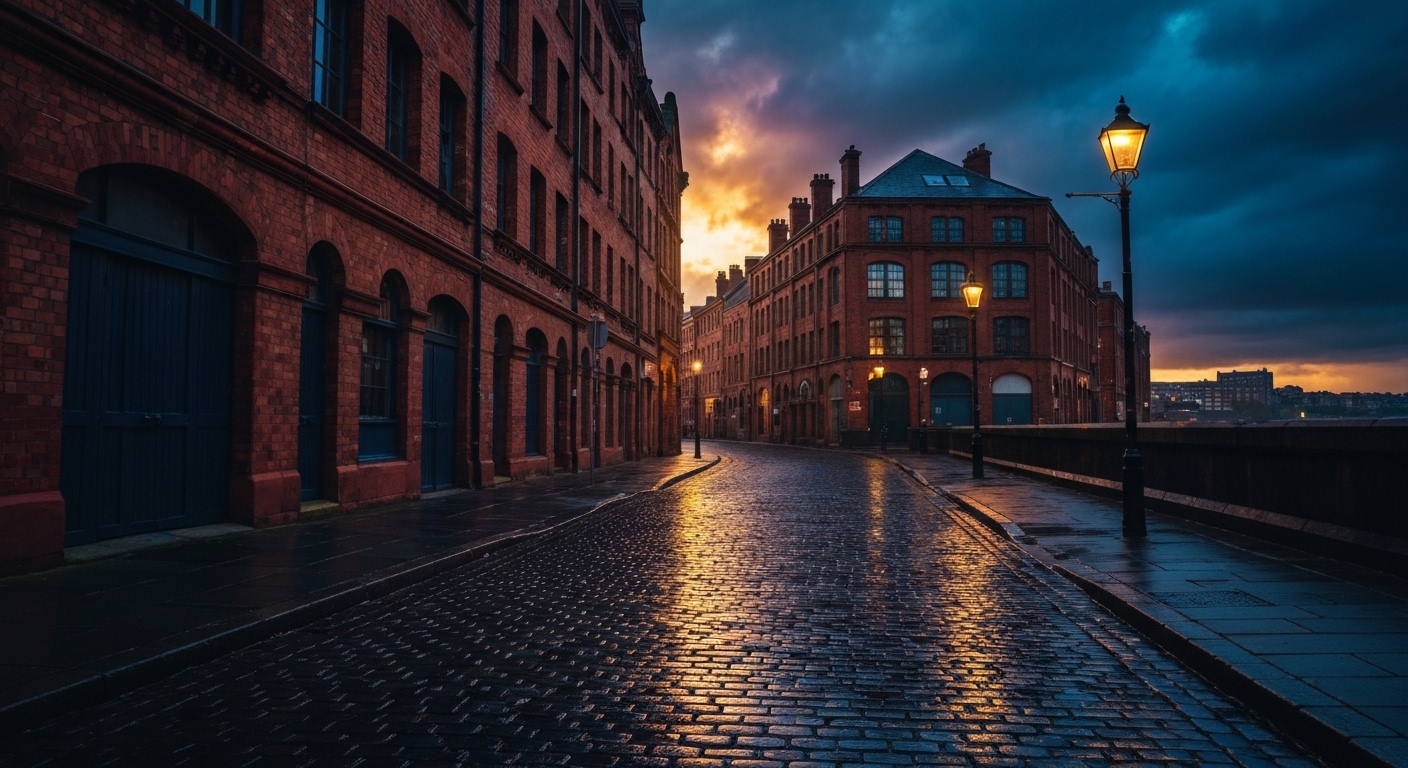
Hope Street itself is worth the walk: the Anglican Cathedral at one end, the Metropolitan Cathedral at the other, and the Philharmonic Dining Rooms — a Grade II listed pub of extraordinary Victorian excess — roughly in the middle. That's one street. Three of Liverpool's best places to visit in Liverpool within five minutes on foot.
4. The Black-E — Liverpool's Most Overlooked Cultural Space
The Black-E in the Great George Street area is a former church turned community arts space that's been running since 1968. It's hosted circus performers, theatre companies, exhibitions, and about forty years' worth of things that didn't fit neatly anywhere else in the city.
It's not glamorous. It's not Instagram-friendly in the way the Albert Dock is. What it is, is genuinely Liverpool — a place that kept the doors open for the city's most experimental creative work when nothing else would. That's worth an hour of anyone's time.
5. Liverpool's Speakeasy Bars — Hiding in Plain Sight
Liverpool has a genuine cocktail bar scene that operates largely below the radar of most Liverpool tourist attractions coverage. Places with unmarked doors, buzzer entry systems, and menus that change based on what the bartender feels like making. The Merchant on Water Street is a good starting point — converted Victorian banking hall, serious cocktails, the kind of ceiling you spend twenty minutes staring at before you realise your drink is empty.
Nine times out of ten, the best bars in any city are the ones that don't advertise. Liverpool is no exception. Ask a local. Or just try every door with no signage until one opens. (This method has a variable success rate but a high entertainment value.)
6. Toxteth and the Granby Street Murals — Street Art with Actual History
Toxteth is the neighbourhood that entered British consciousness through the 1981 riots — a moment that marked real urban pain, genuine economic abandonment, and a community pushed past its limit. The area has been regenerating ever since, slowly and on its own terms.
Granby Street is the most striking evidence. Artist Assemble won the Turner Prize in 2015 partly for their work here, transforming long-empty terraced houses and the street itself into a permanent art installation. Painted facades, potted plants, a monthly street market. It's low-key, it's unforced, and it's one of the more genuinely moving things you can see in the city.
This isn't a polished Liverpool tourist attraction. It's a neighbourhood that found its own way out. That's a different kind of valuable.
7. The Architecture Most Tourists Walk Past
Liverpool has over 2,500 listed buildings. Second only to Bath in the UK. Most visitors walk past them staring at their phones en route to something else.
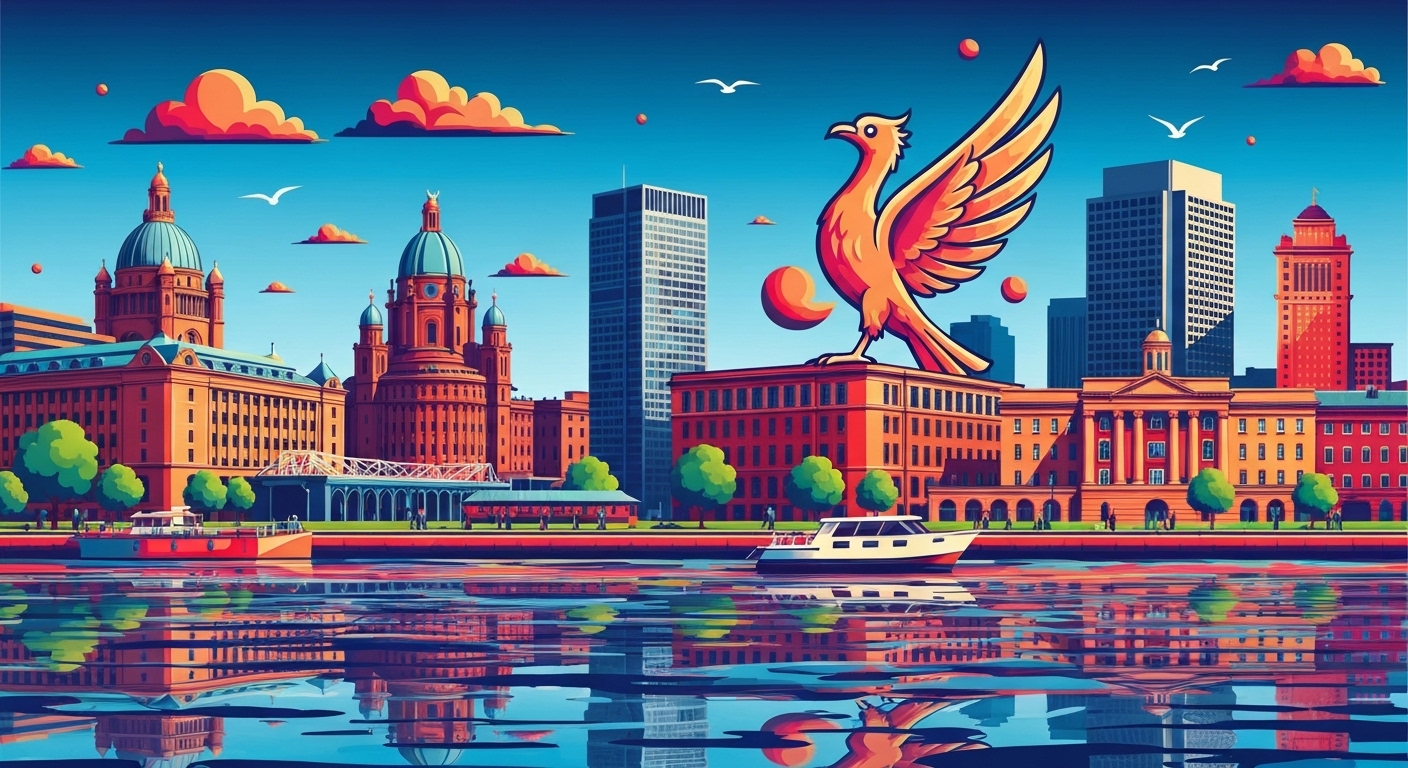
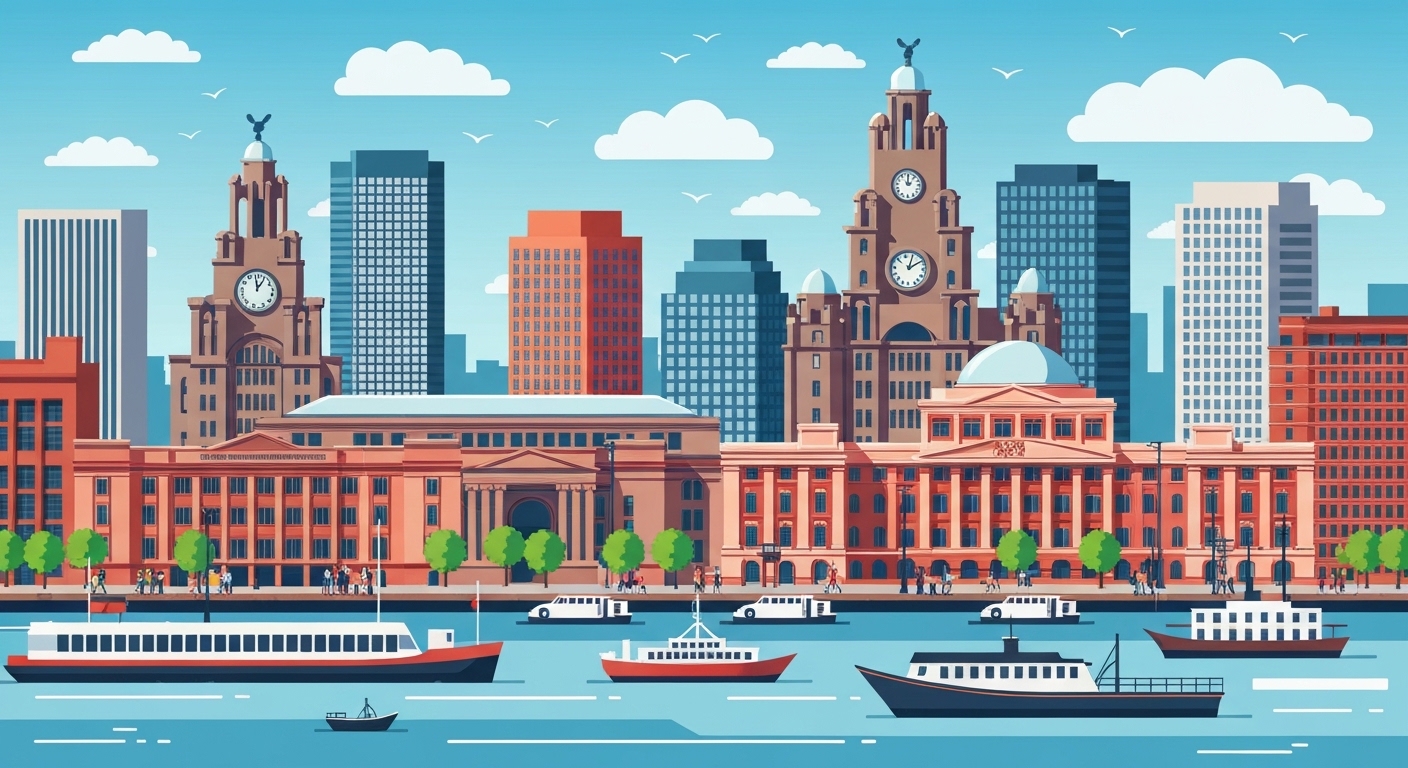
The Three Graces on the waterfront — the Royal Liver Building, the Cunard Building, and the Port of Liverpool Building — are obvious enough. But the city's real architectural depth is in the detail: the ornate terracotta of the former Blackler's department store, the Cotton Exchange on Old Hall Street, the cast-iron colonnades of St John's Market. Liverpool was built on trade that moved the world. The buildings remember that even when the guidebooks don't.
Rule of thumb: look up. In Liverpool, the good stuff is usually above the shopfronts.
Stop Starting Your Liverpool Day at the Cavern Club
Here's a genuine opinion, offered with respect: the Cavern Club on Mathew Street is a recreation. The original venue was demolished in 1973 to build a ventilation shaft for the Merseyrail loop line. The current club, built in 1984, used some of the original bricks. It's fine. The live music is good. The tribute acts are competent. But it's a themed bar built on the memory of something that no longer physically exists.
The Beatles sold an estimated 600 million records globally. John Lennon is one of the most documented musicians in history. You do not need to stand in a reconstructed basement on Mathew Street to understand what they meant. You can listen to the music anywhere.
What you can't do anywhere else is walk through the Williamson Tunnels, or stand on Granby Street, or sit in the Everyman bar while something genuinely unscripted happens around you.
Start your Liverpool day somewhere that can't be recreated. The Beatles will still be there at the end of it, and the Cavern will still be taking walk-ins.
The concrete consequence: visitors who spend their first two hours on Mathew Street typically leave Liverpool having seen the most expensive, least authentic version of it. Flip the itinerary. Baltic Triangle first. Three Graces walk. Williamson Tunnels if you've booked ahead. Cavern last, one drink, tick the box. You'll leave knowing a different city.
What is Liverpool famous for?
Liverpool is famous for The Beatles, its maritime heritage, and the Albert Dock waterfront. The city also has a serious football pedigree and was named European Capital of Culture in 2008. Less discussed: it has over 2,500 listed buildings, a Victorian tunnel network under Edge Hill, and one of the UK's most active creative quarters in the Baltic Triangle. There's more going on here than most visitors realise.
Is Liverpool worth visiting?
Yes, genuinely. Liverpool consistently undercharges for what it offers. The architecture rivals anywhere in England, the music scene is still producing rather than just commemorating, and the people are straightforwardly good company. It's the kind of city where you plan a day trip and start looking at train times back on a longer weekend. Fair warning: you might not leave.
How do I spend a day in Liverpool?
Start in the Baltic Triangle for coffee and a walk around the creative quarter. Mid-morning, head to the Williamson Tunnels if booked (do this in advance). Afternoon along Hope Street — Everyman bar for lunch, both cathedrals on foot. Late afternoon at the waterfront Three Graces. One drink on Mathew Street if you must. That's a proper Liverpool day trip itinerary with actual variety built in.
Is Liverpool or Manchester better to visit?
Different cities, genuinely. Manchester is bigger, faster, and more commercially polished. Liverpool is more compact, more eccentric, and has a waterfront that Manchester can't match. If you're choosing for architecture and atmosphere, Liverpool edges it. If you're choosing for nightlife breadth and transport links, Manchester wins. The correct answer, obviously, is both — but if pressed, Liverpool has more surprises per square mile.
How much does a trip to Liverpool cost?
Liverpool is one of the more affordable major UK cities. Many of the best things to do in Liverpool are free — the waterfront walk, the cathedrals, the Baltic Triangle neighbourhood, the Granby Street murals. The Williamson Tunnels charge a modest entry fee. A decent meal in the Baltic Triangle will set you back roughly £12 to £18 per head. Budget around £60 to £80 per person for a solid day out including travel within the city.
What should a first-time visitor see in Liverpool?
The Three Graces on the waterfront are non-negotiable — the Royal Liver Building alone justifies the walk. After that, Albert Dock for context, Hope Street for architecture, and at least one hour in the Baltic Triangle to understand where the city's creative energy currently lives. If time allows, Williamson Tunnels. That covers the known and the genuinely hidden in one visit.
What are the best hidden gems in Liverpool?
The Williamson Tunnels in Edge Hill top the list — a Victorian underground labyrinth with no satisfying explanation. The Granby Street murals in Toxteth are genuinely moving. The Everyman Theatre bar on Hope Street is a local institution that somehow never makes tourist lists. The Baltic Triangle as a whole is a neighbourhood worth half a day. Any of the unmarked cocktail bars operating quietly around Water Street round it out nicely.
Is Liverpool a safe city for tourists?
Yes. Liverpool is a safe city for tourists as a general rule. The main visitor areas — waterfront, city centre, Hope Street, Baltic Triangle — are busy, well-lit, and actively maintained. As with any city, basic common sense applies at night in unfamiliar areas. The city's reputation from decades past significantly overstates the current reality. Liverpool welcomes roughly 9 to 10 million visitors a year without incident being the story. That's a decent safety record.
The honest summary
Liverpool has been selling itself short for decades by letting the Beatles do all the talking. The city has Victorian tunnels with no good explanation, a street in Toxteth that won the Turner Prize, a theatre bar that locals fiercely protect from discovery, and architecture so dense with history that you genuinely need to slow down to see it.
Nine million people visit every year. Most of them see the same loop. You now know a different one.
Go find it. Joseph Williamson dug a tunnel to nowhere for reasons nobody fully understands, and honestly, that's the most Liverpool thing that's ever happened. You'll fit right in.